
 Español
  Français
  Português
  Italiano
 KKTICK Tank T5
Surprisingly capable £50 rugged AMOLED smartwatch with GNSS, offline maps, huge battery life and rough-but-usable software.
Ratings are contextual to quality band. A 4-star ultra-budget watch and a 4-star midrange watch offer different value propositions.
✓ Pros
- Excellent real-world value at around £50
- Surprisingly good GNSS accuracy for the price
- Offline maps
- GPX route support
- Strava export
- Built-in flashlight
- Very strong feature list for the money
✗ Cons
- Big and bulky
- WearPro / WearJoy need work
- Heart rate export to Strava uses one-minute averages
Specifications
- Release Date
- Q3 2025
- Approximate price (May 2026)
- £50 (eternal discount from ~£100)
- Other names
-
- DTG1
- Rogbid GeoX1
- Display
- 1.43-inch AMOLED, 466 × 466 pixels, tempered glass
- App
- WearPro / Wear Joy, depending on packaging and firmware
- Processor
- Actions ATS3085S
- Storage
- 4GB internal flash memory
- Heart rate and SpO2 sensor
- HX3691
- Battery
- 860mAh
- Battery life
-
- Advertised: 20-25 days
- Review: 10 days
- GNSS
- Lodar AG3352B. GNSS, GLONASS, BeiDou, Galileo, NavIC and QZSS listed
- Barometer and altimeter
- MEMSensing MSP880N
- Compass
- Yes
- Durability standard
- MIL-STD-810H
- Water Resistance
- 3ATM
- Bluetooth version
- 5.3
- Weight without strap
- 50g
- Weight with included silicone straps
- 77 g
- Weight with included metal strap
- 87 g
- Dimensions
- 50x15.5mm
- Watch band type
- Standard 24mm lug width
- Features
-
- Heart rate
- SpO2
- Sleep tracking
- Step counter
- GNSS activity tracking
- Offline maps
- App-based map area transfer
- Cable-based map file transfer
- GPX file upload
- Route navigation
- Strava export
- Compass
- Barometer
- Barometric altimeter
- Bluetooth calling
- Phone notifications
- Weather forecast
- Local music / media storage
- 4GB storage
- LED torch
- Voice recorder
- Calculator
- Decibel meter
- Calendar
- Timers
- Stopwatch
- Alarms
- Find phone
- Watch faces
- DIY photo watch faces
- DIY video watch faces
Disclaimer
DTNO.1 provided this device for free for review purposes with the only condition I add a purchase link. This did not influence my opinion or the content of this review, and DTNO.1 had no input before or after publication.
Official product page
For reference, the manufacturer listing is here: KKTICK Tank T5
Box contents
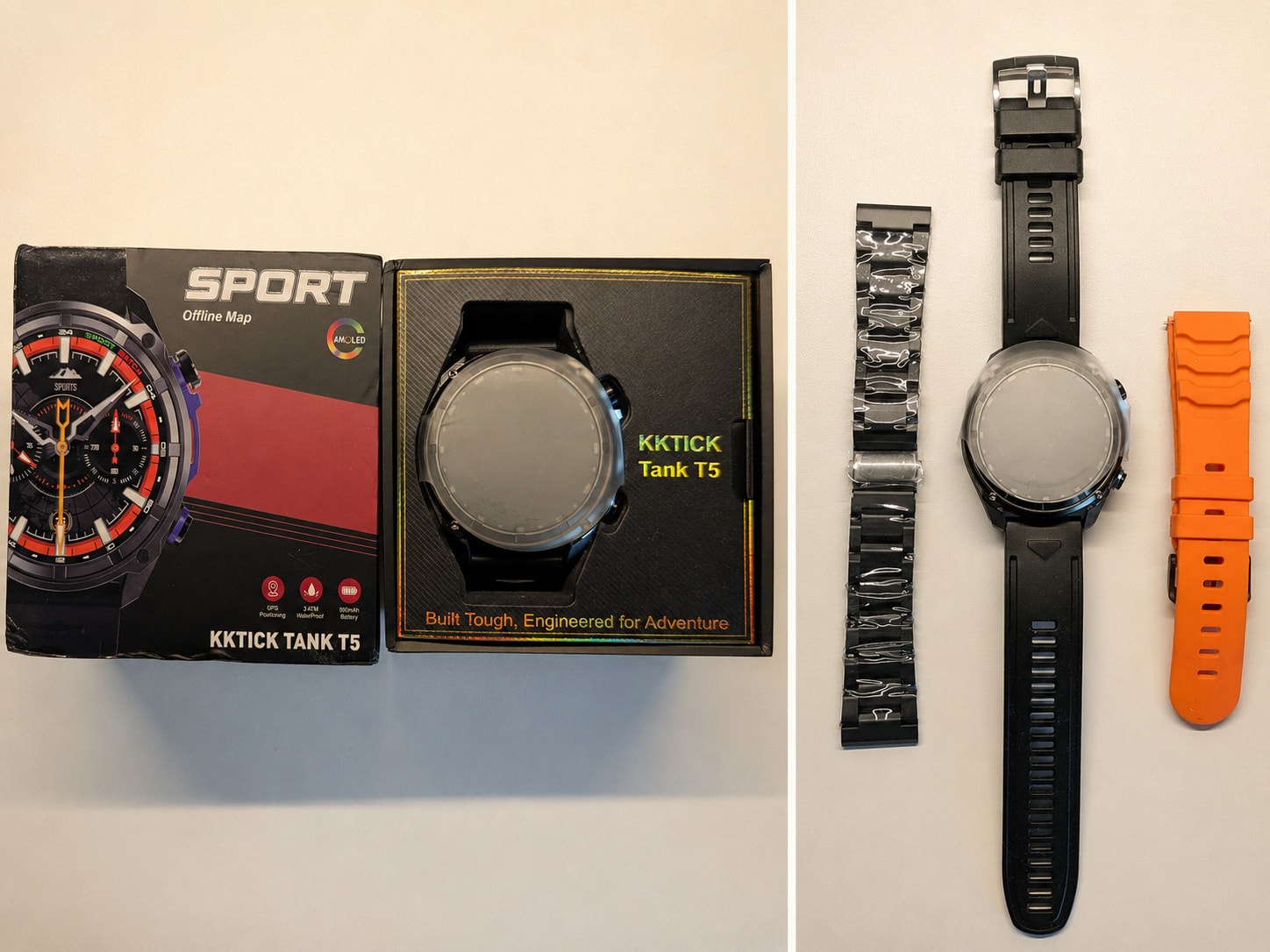
Retail bundles vary, so check the exact listing before buying. This watch is sold either as the KKTICK Tank T5 directly by DTNO.1 or as the DTG1 OEM via resellers - the model reviewed here is the KKTICK Tank T5. That version comes in nicer, more premium-feeling packaging and includes an extra metal strap.
Inside are a charging cable, documentation, two silicone straps (orange and black) and a steel strap.
Design and Build Quality
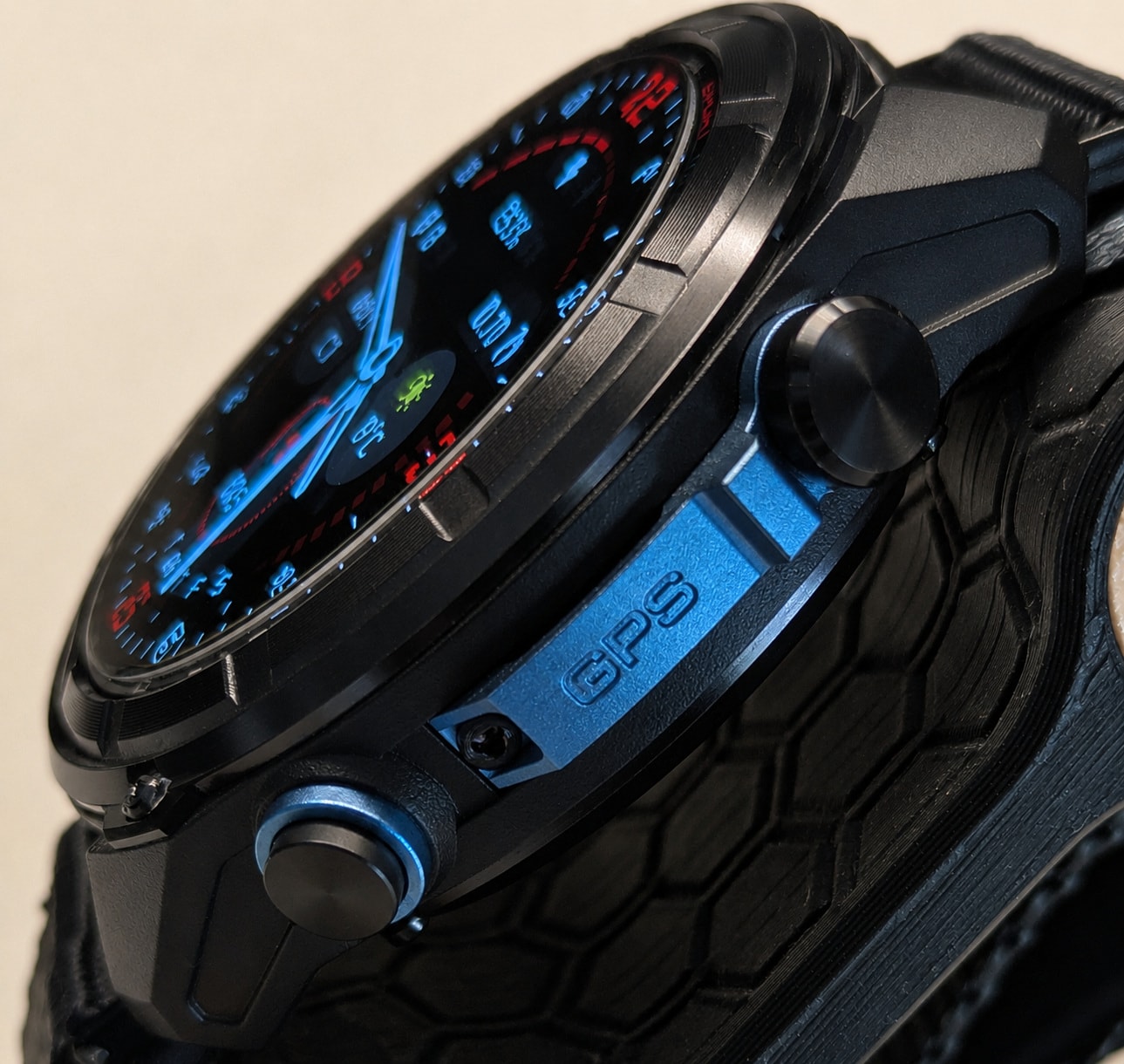
The Tank T5 looks exactly like what it is trying to be: a big, tactical-looking outdoor watch with a chunky bezel, visible screws, large side controls and a built-in flashlight. It’s basically a carbon copy of Garmin’s Descent Mk3i.
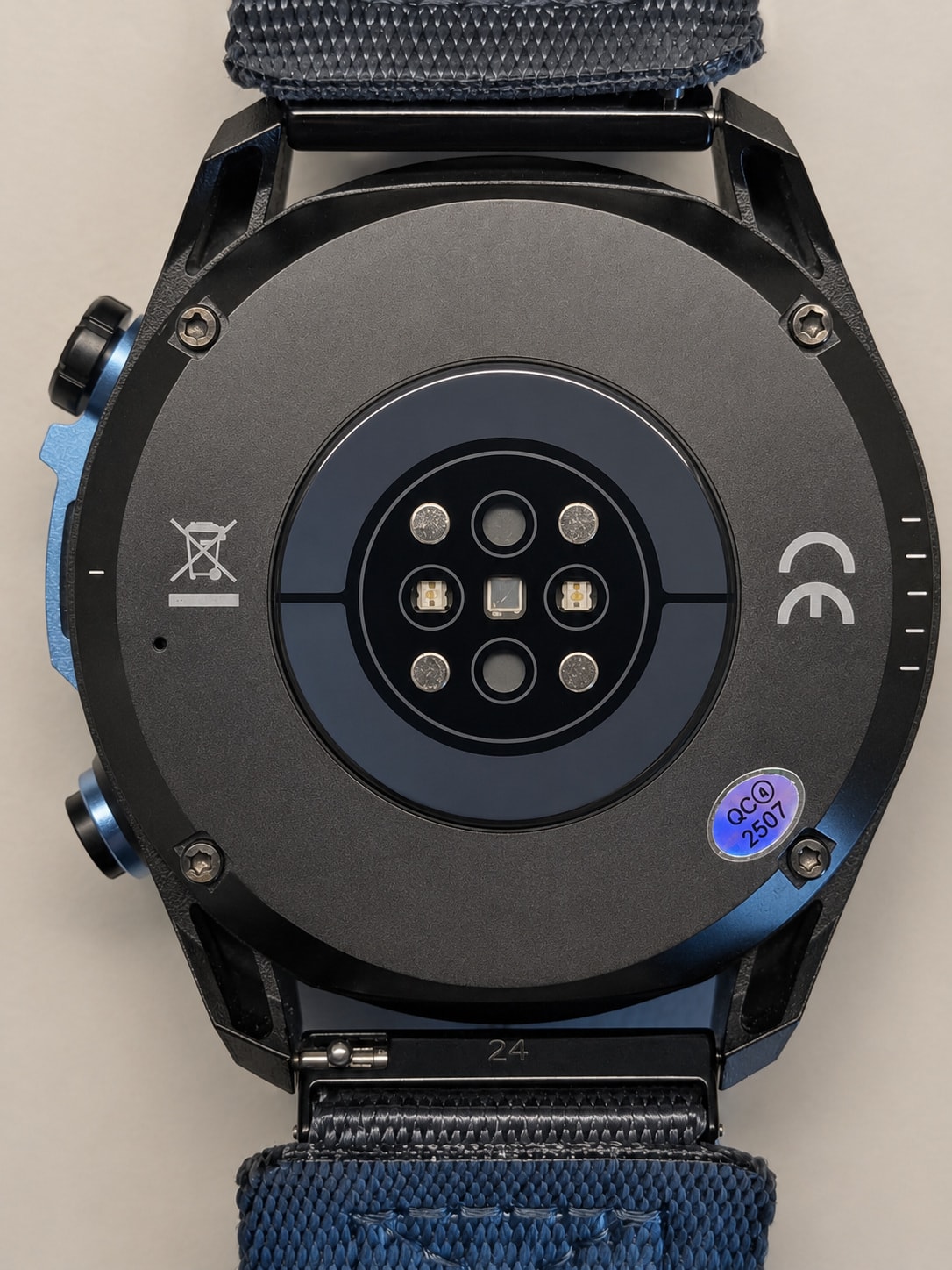
Build quality is one of the strongest parts of the watch. Both bezel and backplate are metal, probably zinc-alloy, while the main body is plastic. It’s really solid and tight, and feels convincingly durable on the wrist. DTNO.1 claims MIL-STD-810H and 3ATM ratings, and while I would always be careful with rugged-watch marketing, the physical hardware at least looks and feels the part. The case is solid, the buttons feel purposeful, and the integrated flashlight is not just a screen-brightness gimmick.
It is MASSIVE. It’s not only 50mm wide but also 15.5mm thick, presumably to accommodate the gigantic 860mAh battery: this is not a discreet watch. The first thing I noticed was how tall it was. I love huge watches, so this was hardly an issue for me.
The strap size is 24mm, which is annoying, as straps in this size are harder to find than you might expect. Other watches that use 24mm straps, like Coros, use thicker pins that won’t fit here. In the end, I had to resort to a flimsy 24-22mm adapter so I could fit a velcro-nylon band, my favourite type and a must because I can’t abide silicone or rubber straps.
Display
A typical 1.43-inch AMOLED panel at 466x466 pixels. It’s a good quality display with good colour reproduction and sharpness. Brightness is undisclosed, but I’d guess somewhere between 600 and 1000 nits. It was clearly visible with polarised sunglasses, and I had no real issues outdoors beyond needing to adjust the brightness by hand, which was expected.
The screen is protected with tempered glass of unknown hardness, although 9H is typical in this segment. “Explosion-proof tempered glass”, apparently. I recommend fitting a screen protector if you are rough with watches or really take it outdoors.
Watch interface
The watch interface is quite typical, with predictable navigation and decent fluidity from the Actions ATS3085S chip. The basic layout is familiar enough: swipe down for quick settings, up for notifications, sideways through widgets, and the lower physical button jumps into sports modes. The problem is organisation. GNSS, offline maps, compass, barometer, flashlight, Bluetooth calls, sports modes, health widgets, media storage, weather, recorder, calculator and assorted extras are all here, but they do not feel curated.
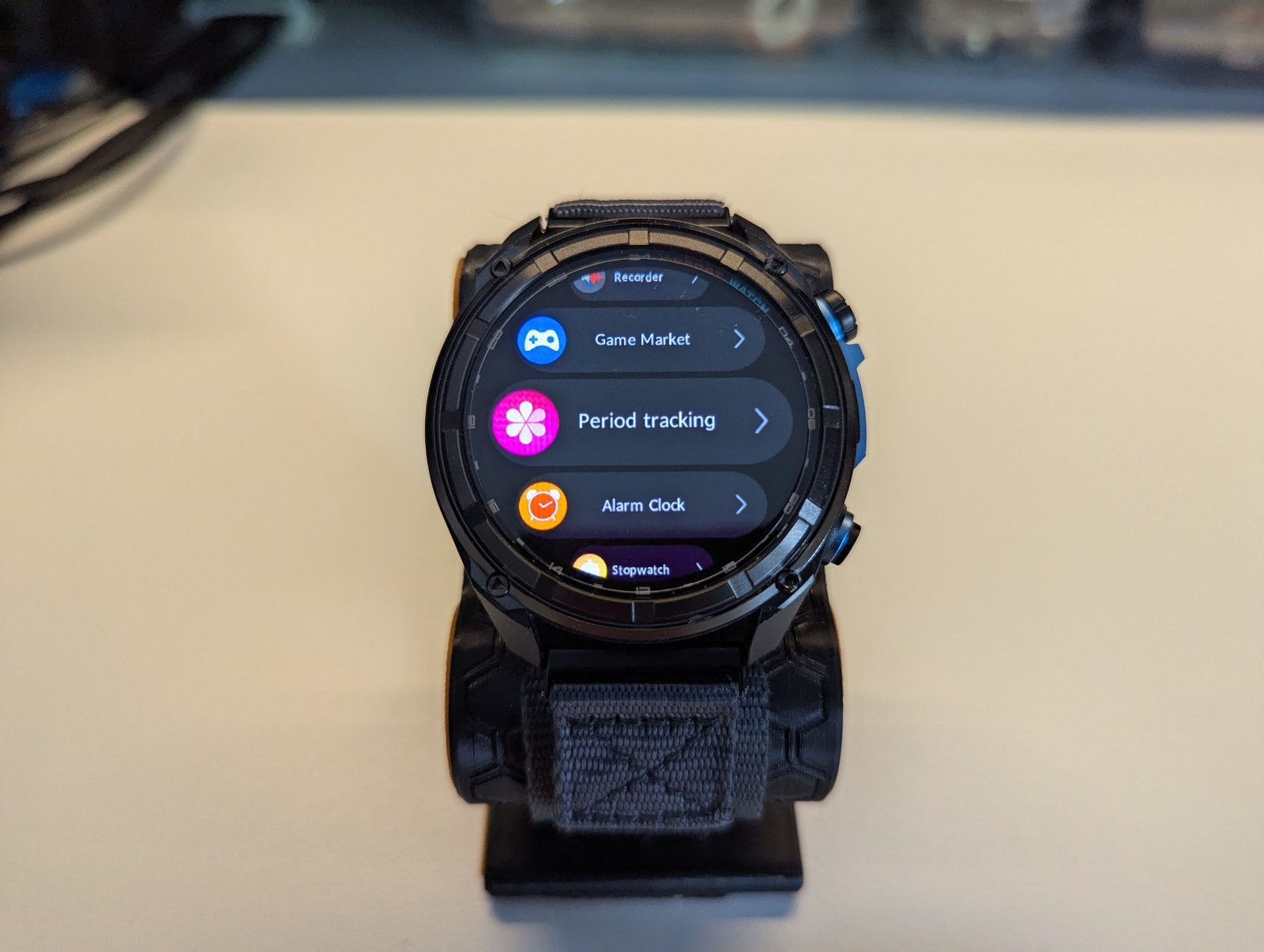
The English translation is hit and miss, and that causes a few usability issues in the settings. Some labels are just odd: there’s a “Screen brightness” toggle in display settings that I’ve no idea what it does, and “always-on display” is called “idle clock”, while a separate “Always on” menu controls scheduling and how long the watch keeps the display active after sleep.
That second part is a novel little feature I hadn’t seen before. You can have the AOD remain visible for a few minutes after sleep and then switch off completely, in addition to the actual “always” setting on “always-on display”, or leave it on continuously like a more typical smartwatch.
The torch
The built-in torch is good. A proper little LED array behind a diffused panel, and actually quite bright. The beam is broad and soft rather than tightly focused, so you can see a decent amount at short range.
That makes sense for a watch like this. It is not a substitute for a proper torch, but for keys, dark rooms, bins, stairwells, camping faff and other quick jobs where pulling out your phone is annoying, it is genuinely useful.
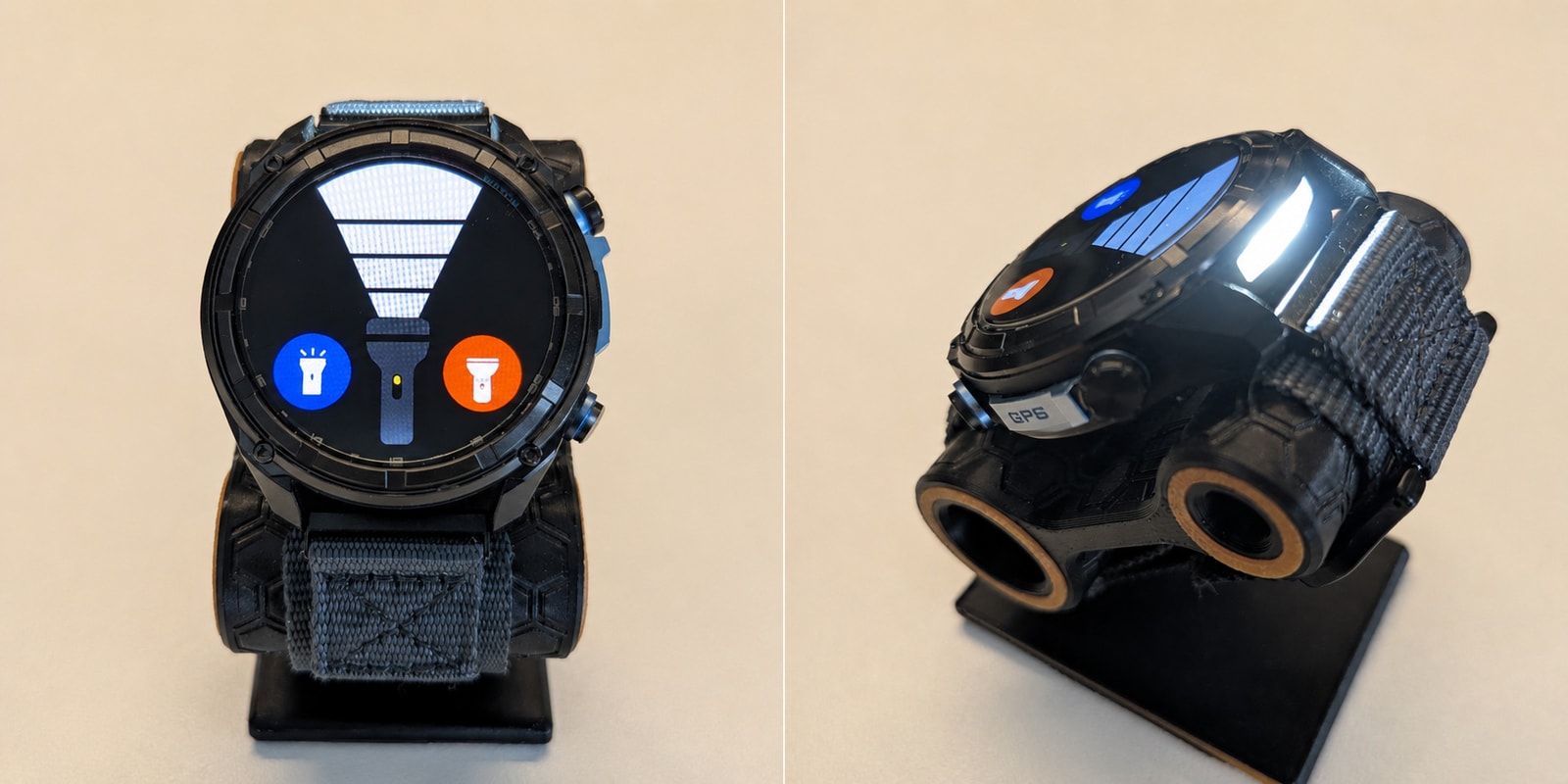
Long-pressing the crown activates it, and it does work during workouts, which is exactly what you want from a feature like this. The problem is usability. The long-press takes a bit too long and does not work when the screen is off.
It also opens the torch app rather than just turning the light on. That means dismissing the app to return to your previous screen turns the torch off too, which is clumsy. If the watch is in do-not-disturb mode, it is worse: it takes three actions to turn the torch on, because you need two taps to wake the screen and then the long-press on the crown.
All of this feels easily fixable in software. I reported it, but never got any feedback from the company.
Watch faces and AOD
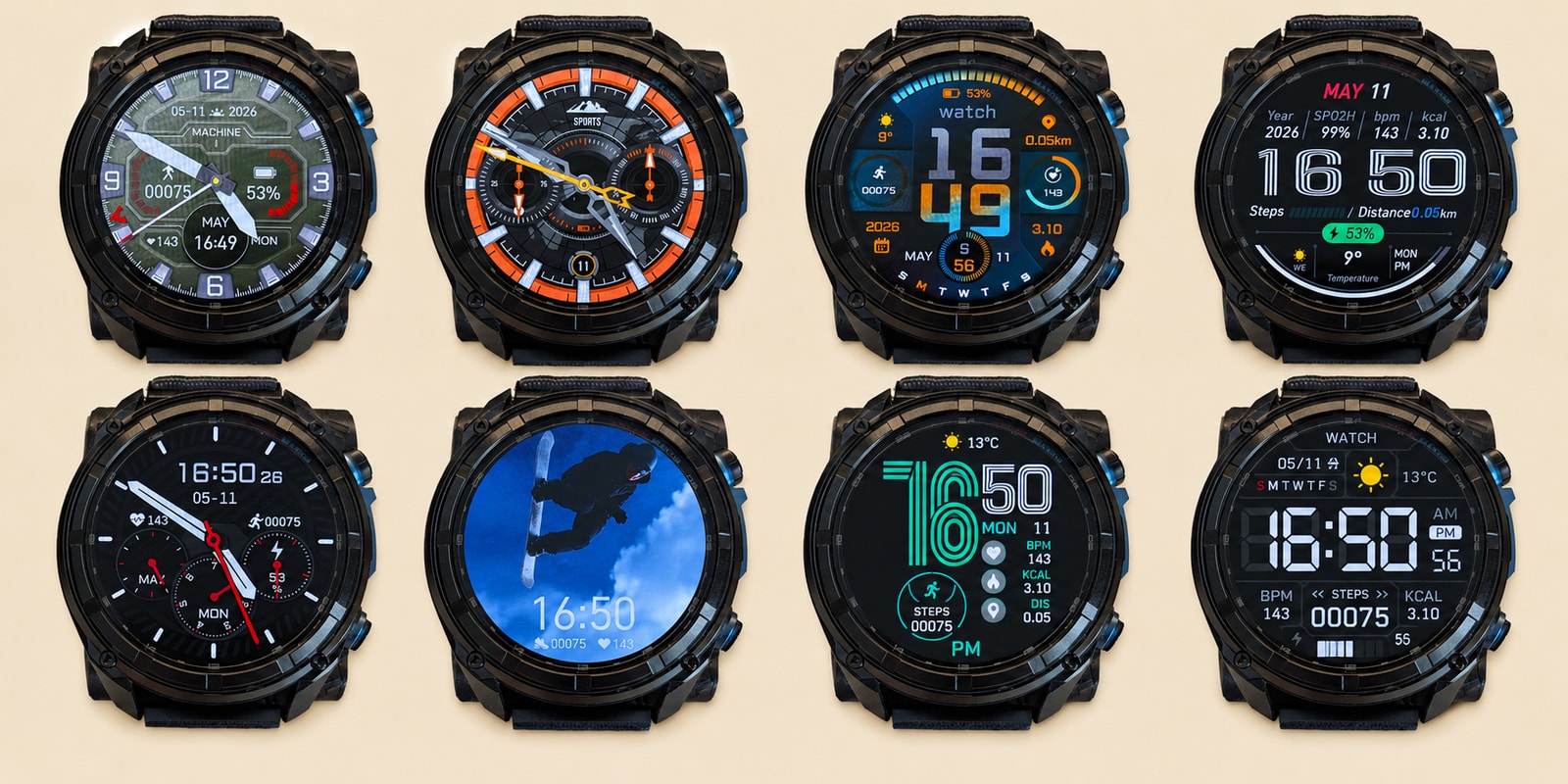
The Tank T5 supports downloadable watch faces, photo watch faces and video watch faces. There’s a huge selection on the apps, with a weird peculiarity: on WearPro, most are paid, whereas in WearJoy they’re all free. The same library. Then there’s a second library on the watch itself, all free, with watch faces not on the apps. Weirdly, it works with no Bluetooth connection - I suspect they’re stored in the watch’s ample storage, masked and unavailable.
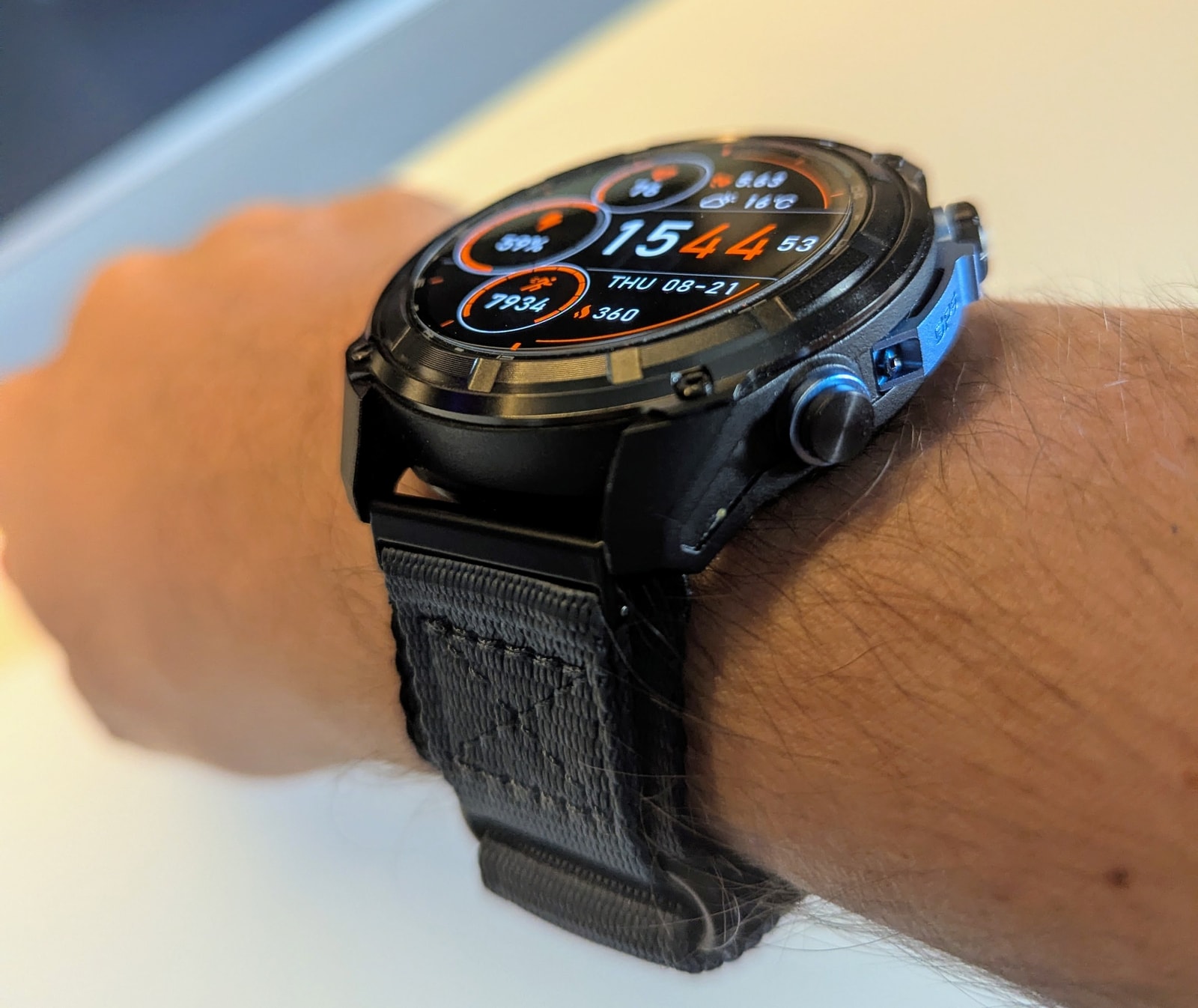
There’s a huge selection of watch faces, many of which will be recognisable to Garmin, Huawei, Xiaomi and Amazfit users. There are plenty of really good ones as well. Here’s a mix of bundled and downloaded faces:
Battery Life and Charging
The Tank T5 has an 860mAh battery, which is enormous by smartwatch standards. KKTICK claims 20-25 days of normal use and up to 60 days of standby - for a definition of “normal use”. In my testing, I got 10 days of heavy usage, and I mean heavy: all monitoring cranked up, 40 minutes daily of GNSS-tracked activities, workouts, AoD disabled and raise to wake enabled. I would have hoped for a bit extra given the humungous battery size, but 10 days is still excellent.
Charging takes around 3 hours. It’s not exactly quick, but it is a large battery, and if your usage is more frugal than mine you’ll only need to charge it every couple of weeks.
As usual with budget smartwatches, I would avoid fast chargers. Use a laptop USB port or a basic USB-A charger. These watches are not always great at input regulation, and cooking the battery to save half an hour is a bad trade.
Health Monitoring
The Tank T5 covers the usual health basics: heart rate, SpO2, sleep tracking, step counting and general wellness-style metrics. You can set most of them on a fixed, non-configurable schedule (eg heart rate once every 10 minutes).
The daily-activity view is good. You get the usual rings-style summary for steps, distance and calories, plus simple daily and weekly breakdowns. It is a clear way of checking general progress at a glance.
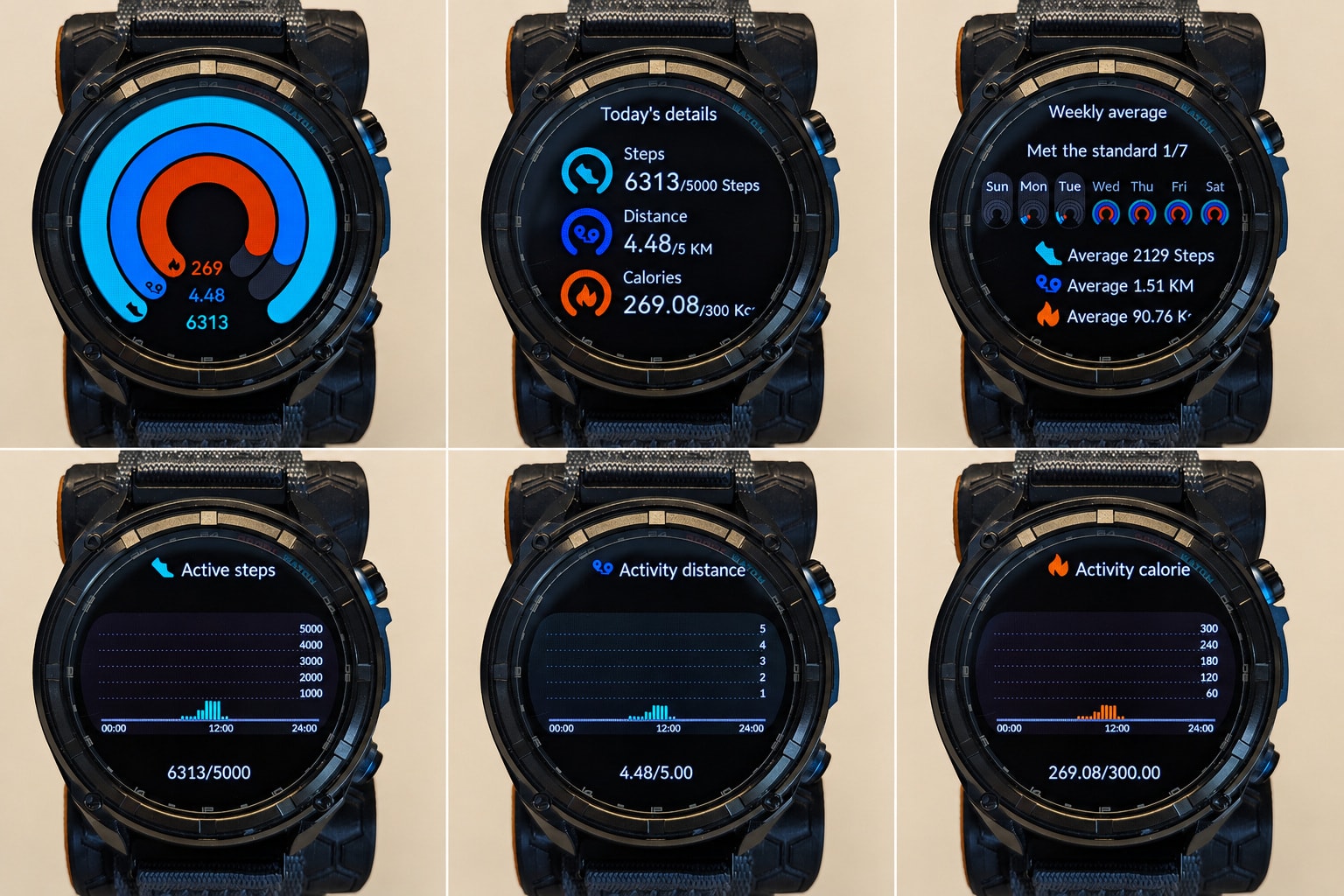
Heart rate and SpO2
The sensor is listed as a HX3691 - single photodiode and double LEDs, one of which doubles as red and green (not sure if there’s an infrared LED). As usual, I expected very little from it, but the results surprised me enough that the workout-specific findings make more sense in the sports-tracking section below.
The main caveat is how data is recorder in the app, which also affects exports to Strava - heart-rate data appears to be saved as one-minute averages rather than second-by-second data, so the graphs look stepped and smoothed. That makes direct comparison less than ideal because my reference Polar H10 chest strap is much more granular, and it probably understates how close the live wrist reading often looked during workouts.
SpO2 is included, but I would treat it as a rough wellness feature.
Sleep tracking
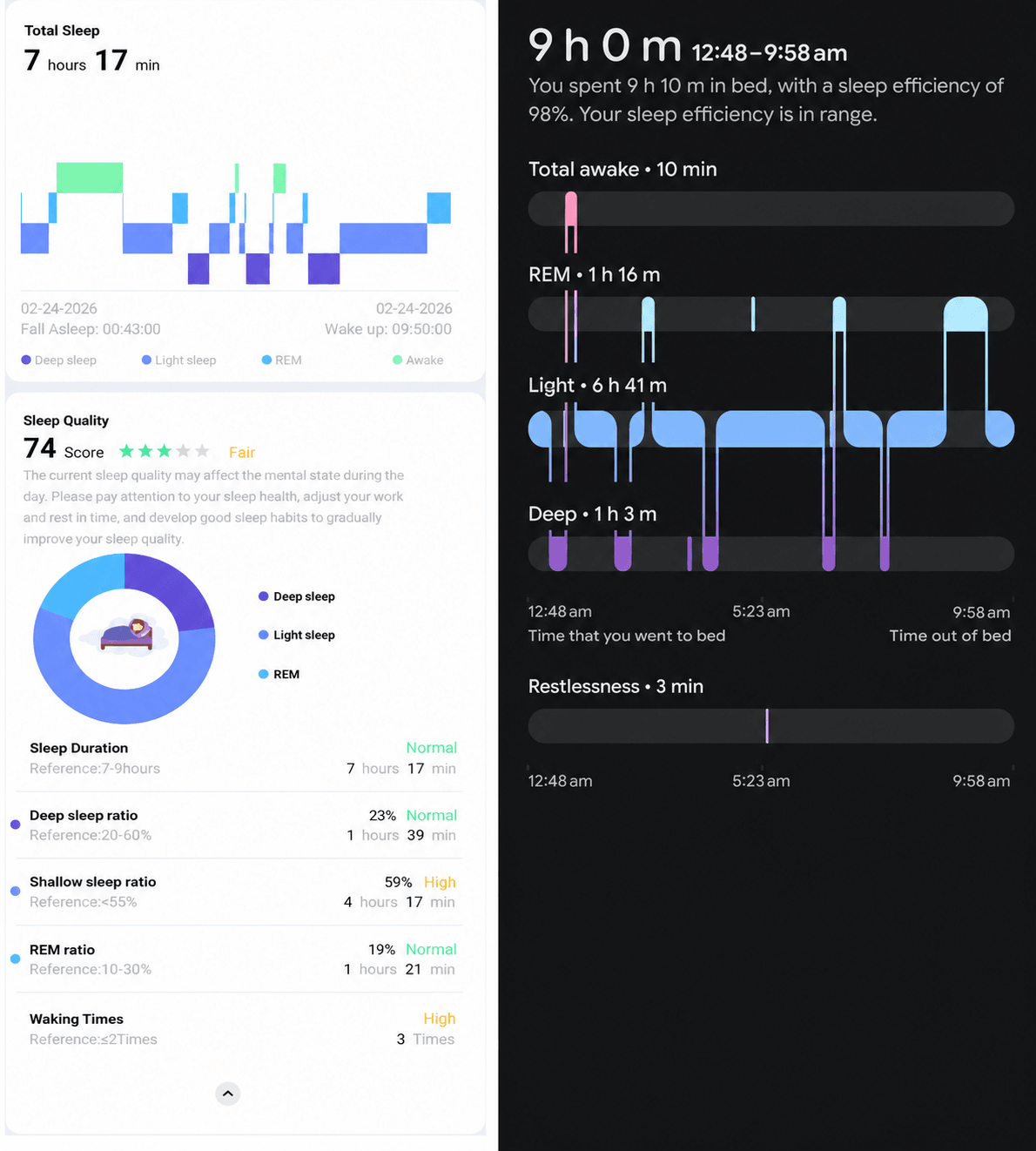
Sleep tracking is hit and miss. Asleep and wake-up times were detected more or less reliably, but the watch had a tendency to overcount awake time, and sleep stage detection was all over the place. Not the strongest feature on the watch. Here is the same night on a Pixel Watch 2, one of the top sleep trackers at the moment.
Stress and wellness metrics
The Tank T5 includes the usual wellness bits, depending on firmware and app version: breathing exercises, stress-style metrics, reminders and general health cards.
I would not put much weight on them. These metrics are usually derived from heart-rate patterns and sometimes HRV-like estimates, but budget watches rarely expose enough data to make them meaningful.
Treat them as decoration unless proven otherwise.
Outdoor Features
This is where the Tank T5 becomes genuinely interesting.
Most cheap smartwatches pretend to be outdoor watches by adding a chunky case and military-looking faces. The Tank T5 at least includes some of the right hardware: built-in GNSS, offline maps, compass, barometer, altimeter, GPX support, flashlight and a large battery.
GNSS tracking
GNSS accuracy was one of the biggest surprises.
I tested it against an Amazfit T-Rex 3 Pro on dual-band, high-accuracy mode - a high-end adventure watch - and the Tank T5 held up far better than I expected. Time to GNSS lock was within about 10 seconds, which is really, really good. The actual tracks were not perfect, especially around buildings and tighter turns, but it followed the same route without the wild drift or corner-cutting I normally expect from cheap smartwatches.
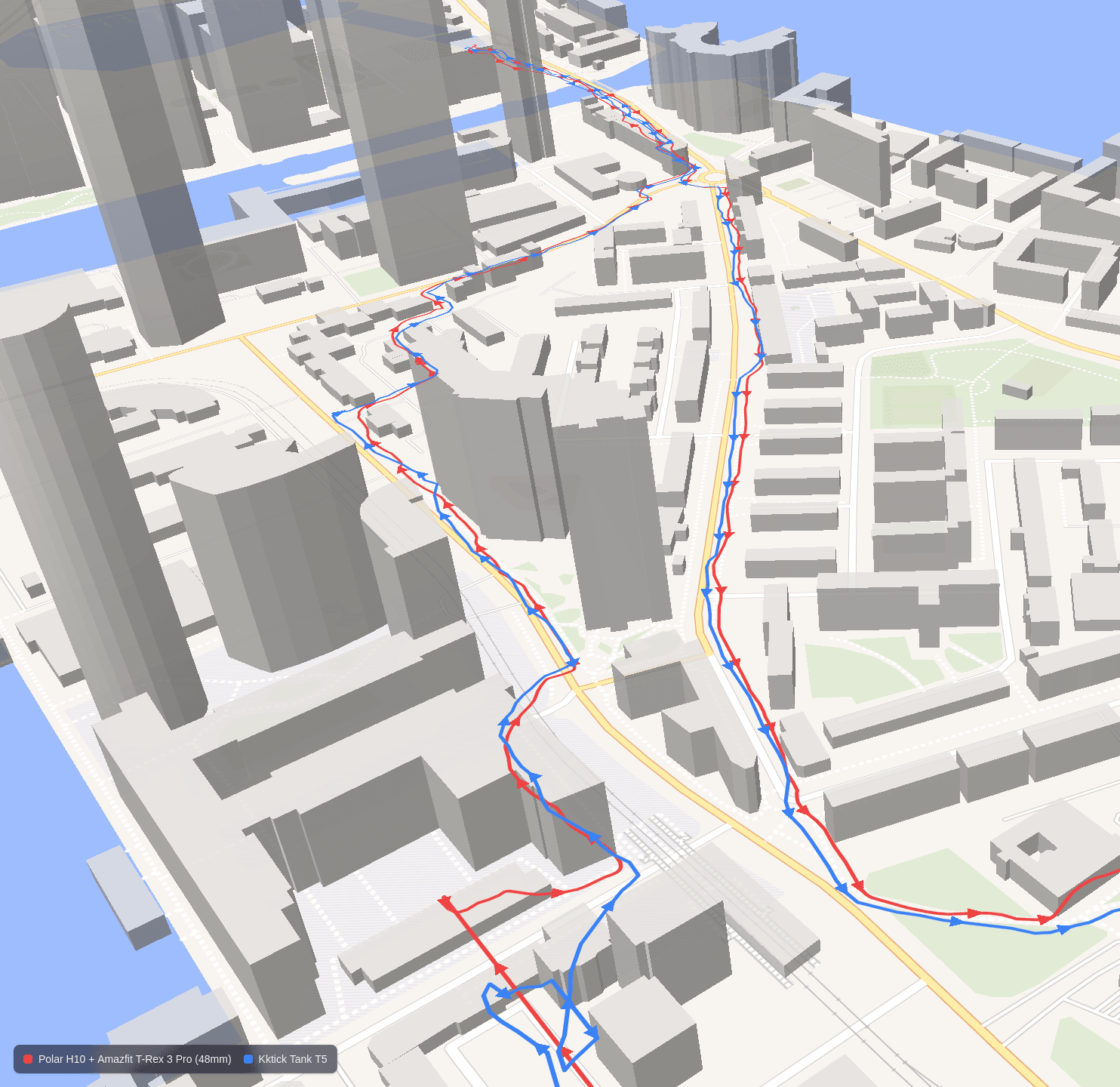
On longer open sections it stayed surprisingly close to the Amazfit. In more complex urban sections, the T-Rex 3 Pro was cleaner, but the Tank T5 did not embarrass itself. It’s an excellent result for a single-band unit.
For around £50 in real-world marketplace pricing, this is a genuinely decent GNSS result. I would not put it in the same class as the T-Rex 3 Pro, but for walking, hiking and casual route logging it is more than good enough.
That changes the character of the watch. If the GNSS was rubbish, the offline maps and outdoor features would mostly be theatre. But the GNSS is actually usable, so the whole package becomes much more credible.
Offline maps
Offline maps are the headline feature.
This is what separates the Tank T5 from the usual cheap rugged smartwatch. It can store maps locally, supports route navigation, and can work with GPX files. On paper, that is excellent for the price.
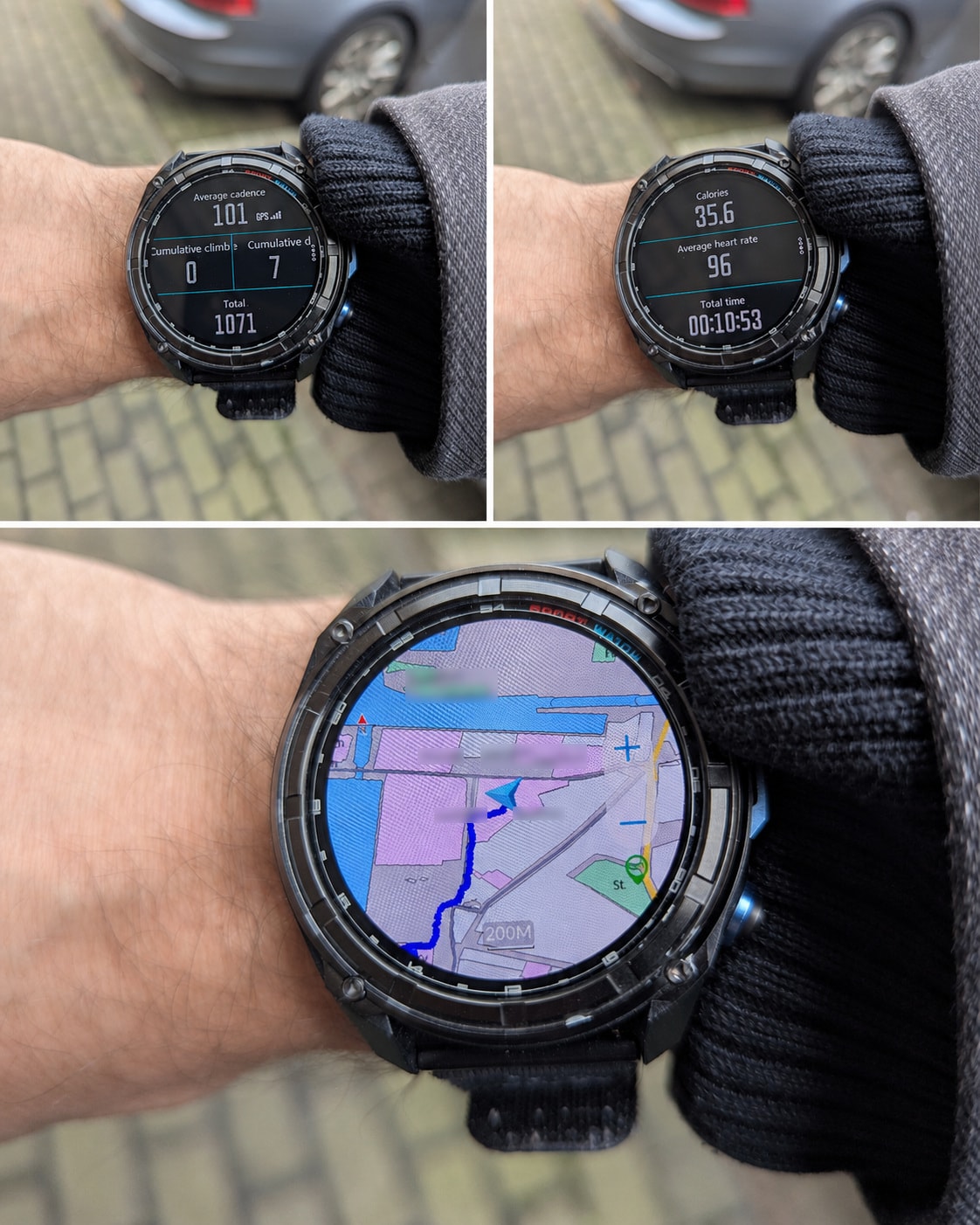
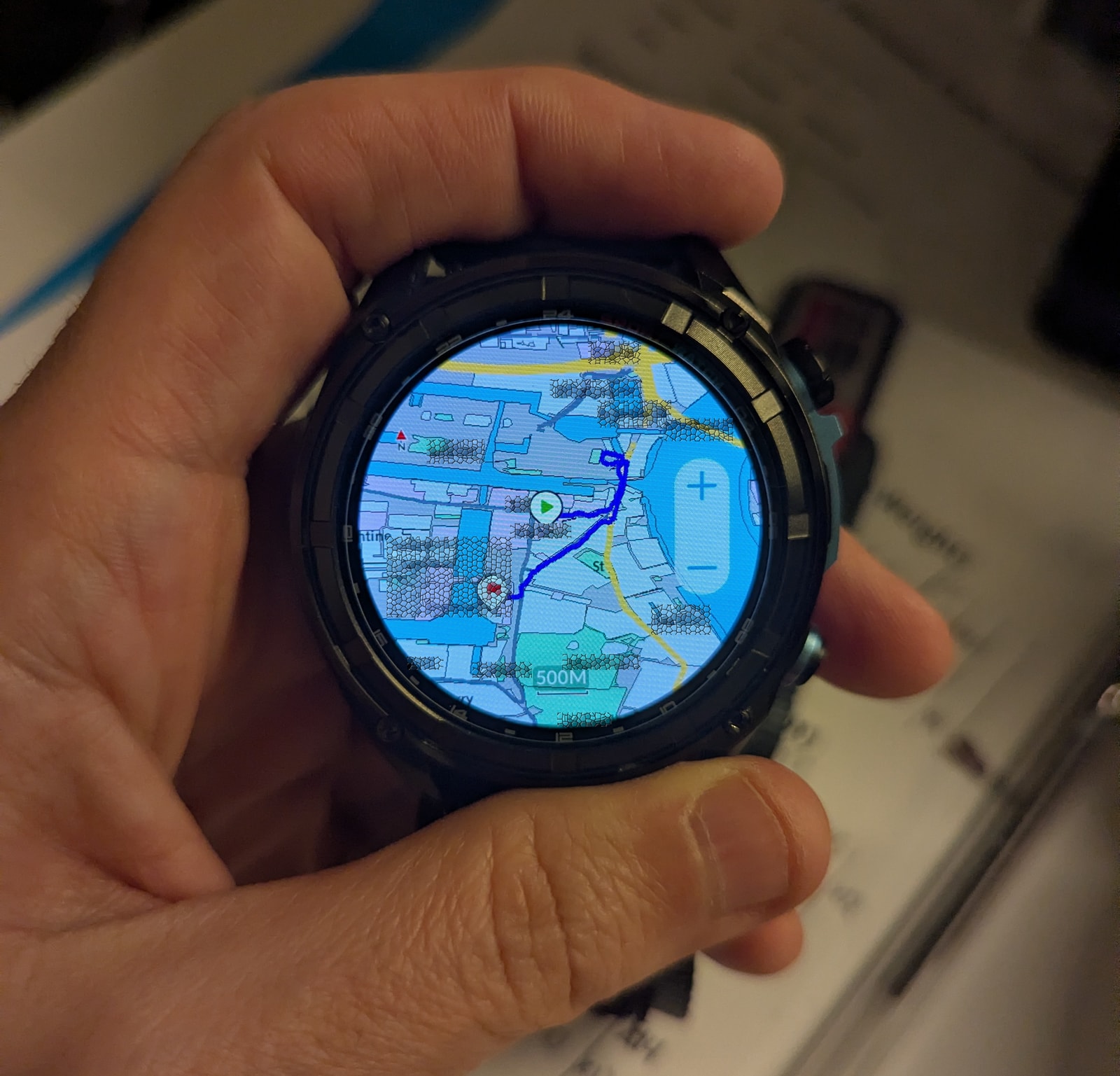
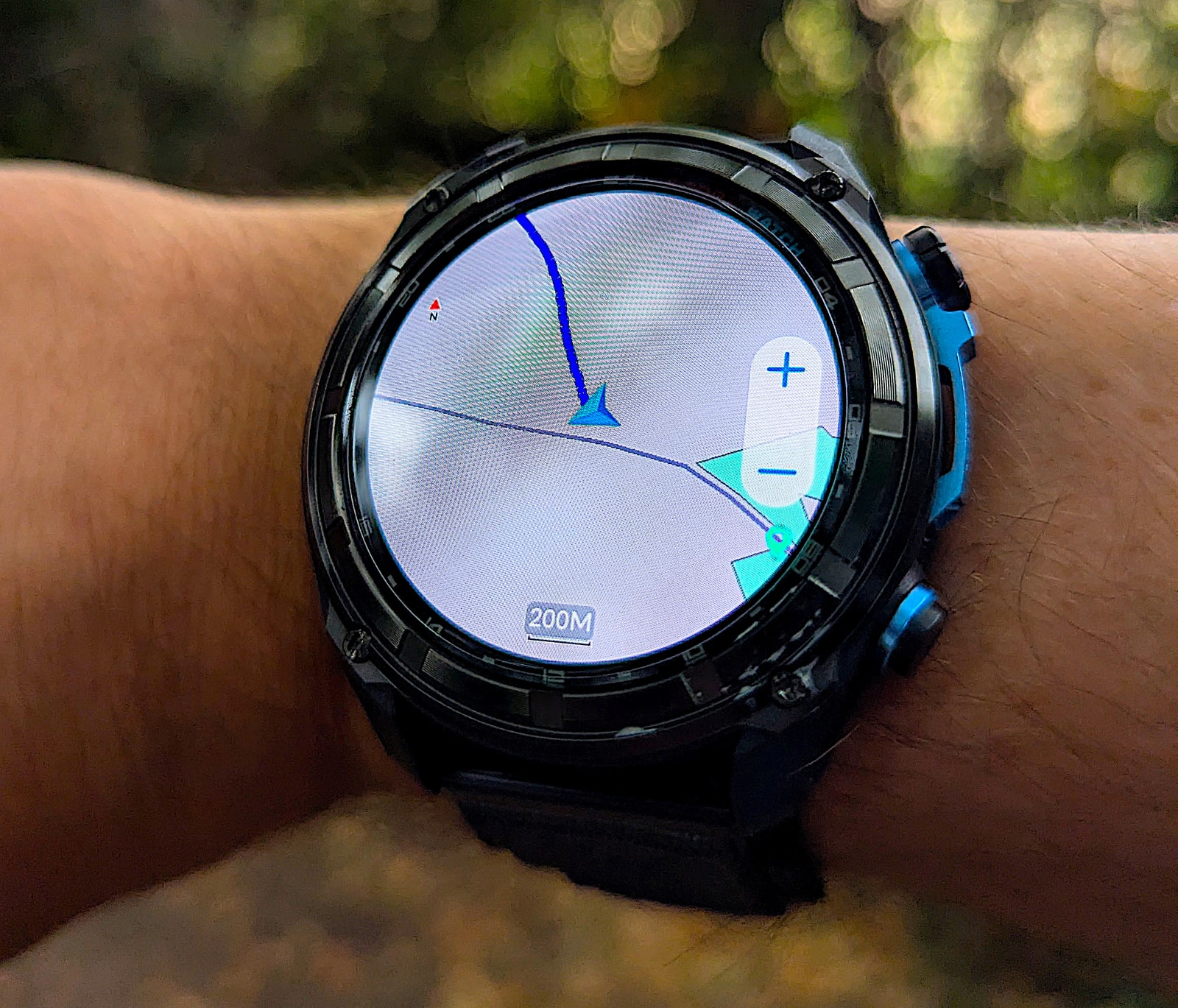
Map handling appears basic, although you’re free to move around a fixed area around your position and you do get a small amount of labelling. You can send maps to the watch in 3 ways: using the data cable, you can download them from DTNO.1’s website and either copy them manually to a certain folder or use a Windows program; and you can also select an area on an interactive map in the app. And you have 4GiB of storage to play with. Good stuff.
You can also record and send GPX routes to the watch using the app, a relatively recent development.
This is not Garmin-level polish, and it is not proper turn-by-turn navigation. Think of it as map viewing and route-following: good for checking rough position, following a simple GPX line, or using it as backup navigation rather than as your only guide in the middle of nowhere.
Compass, barometer and altimeter
The Tank T5 includes a compass, barometer and altimeter.
These are useful additions, and I like seeing them on cheap watches. Even if imperfect, they make the watch more useful outdoors.
The compass is definitely handy, especially alongside maps and route tracking, and works pretty well once calibrated. No complaints here.
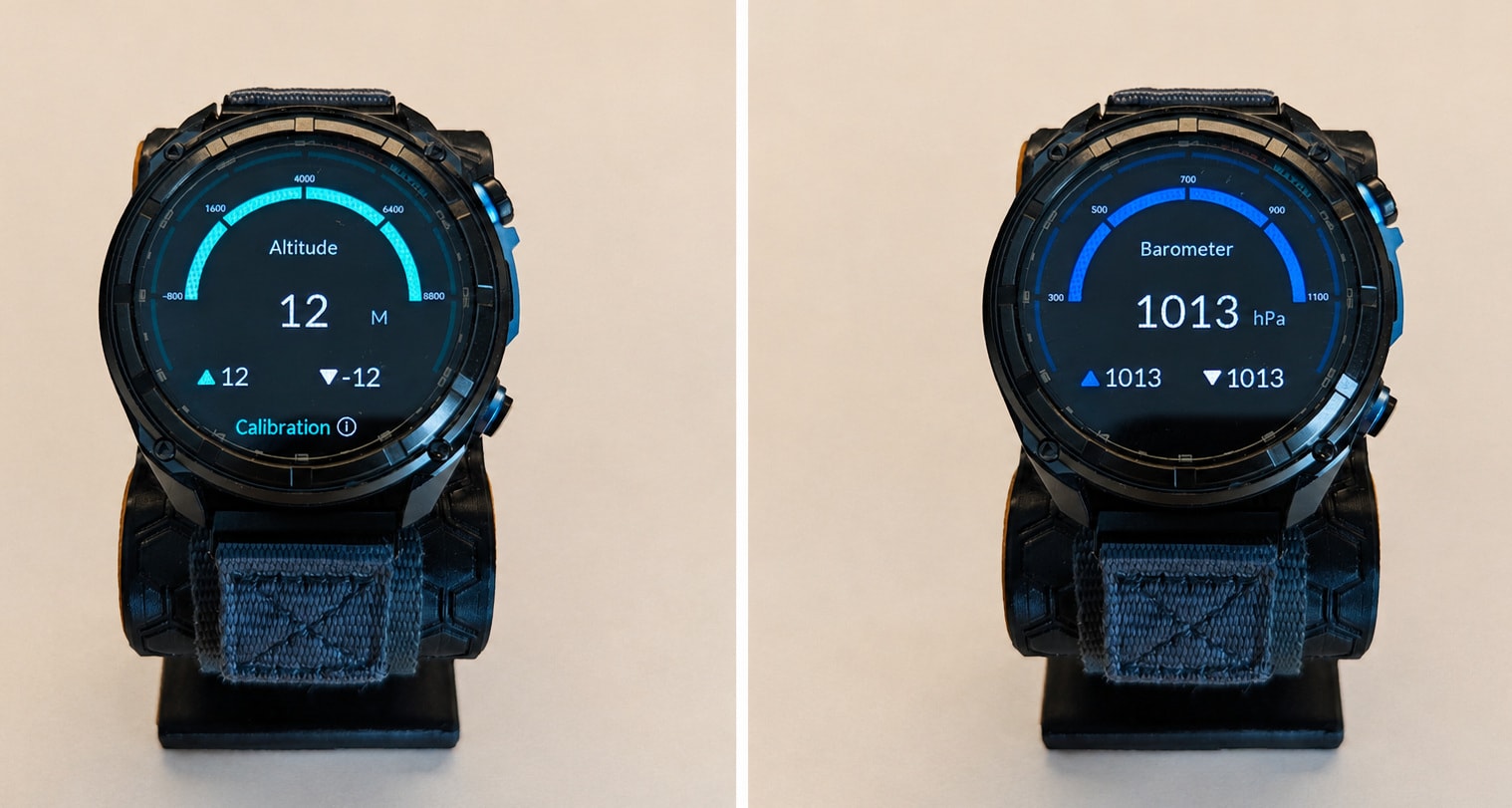
The watch does not seem to self-calibrate the barometric altimeter from GNSS during workouts, so it relies on manual calibration before you start an activity. This is more a software limitation than a hardware one, and it should be fixable. As it stands, manual calibration is only a temporary workaround because a barometric altimeter drifts as atmospheric pressure changes. In practice, the calibration is only really trustworthy for a couple of hours before altitude error creeps back in.
Step counter
Step counting is a mixed story.
Before one firmware update, it could massively overcount steps while I was effectively at rest. The picture below was not from an insane outdoor walk. I was at home, cooking, and every time I glanced at the watch another 2 or 3 thousand steps had been added. About 30,000 steps by 11am and nearly 70000 by bedtime.
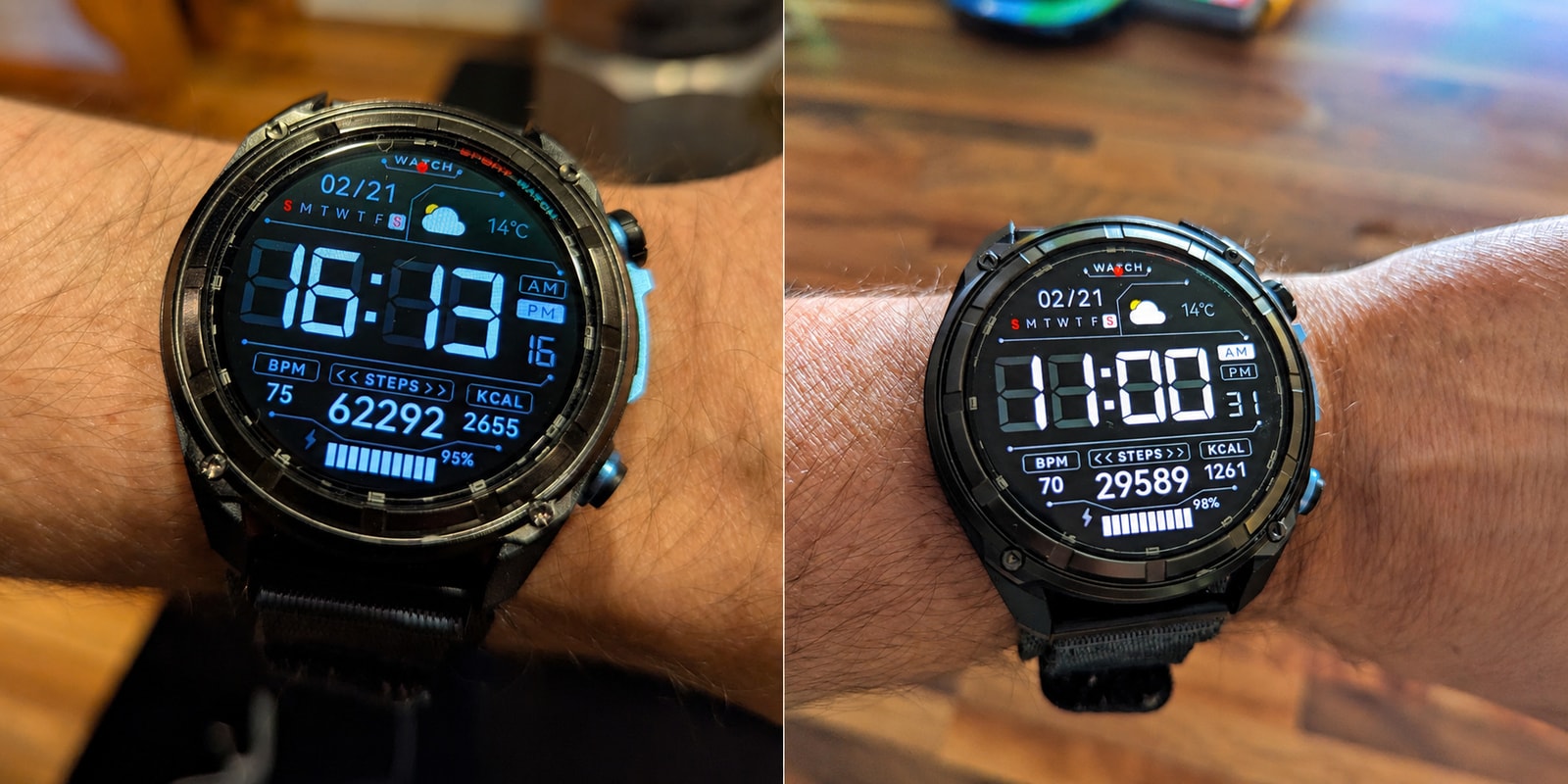
That was obviously a fluke, and I was happy to see it fixed after the update, but the watch still remains wildly optimistic outside tracked activities. General all-day step totals are not something I would trust, especially if you wear the watch on your dominant hand.
Oddly, it behaves much better once you are actually in a workout. During activities, step counting is rather precise. So this is less the hardware being unable to count steps at all, and more poor filtering in day-to-day background tracking.
Sports tracking
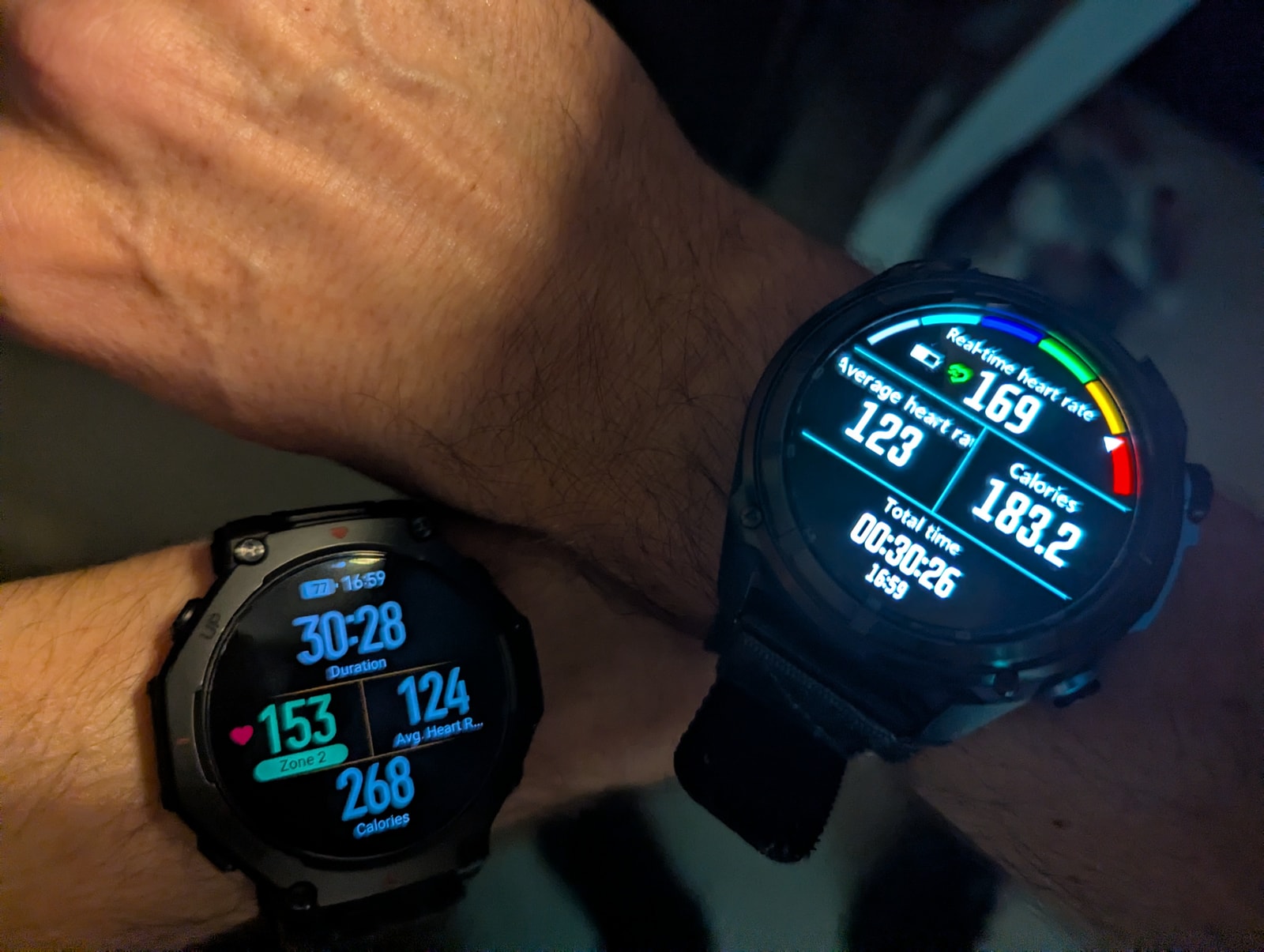
I tested the Tank T5 against higher-quality reference devices, including a Polar H10 chest strap for heart rate and an Amazfit T-Rex 3 Pro for GNSS.
The overall result is simple: GNSS is the standout, and the heart-rate sensor is unusually good for this price range even if the exported data does not always show it well.
Sports modes
The watch advertises 100+ sports modes.
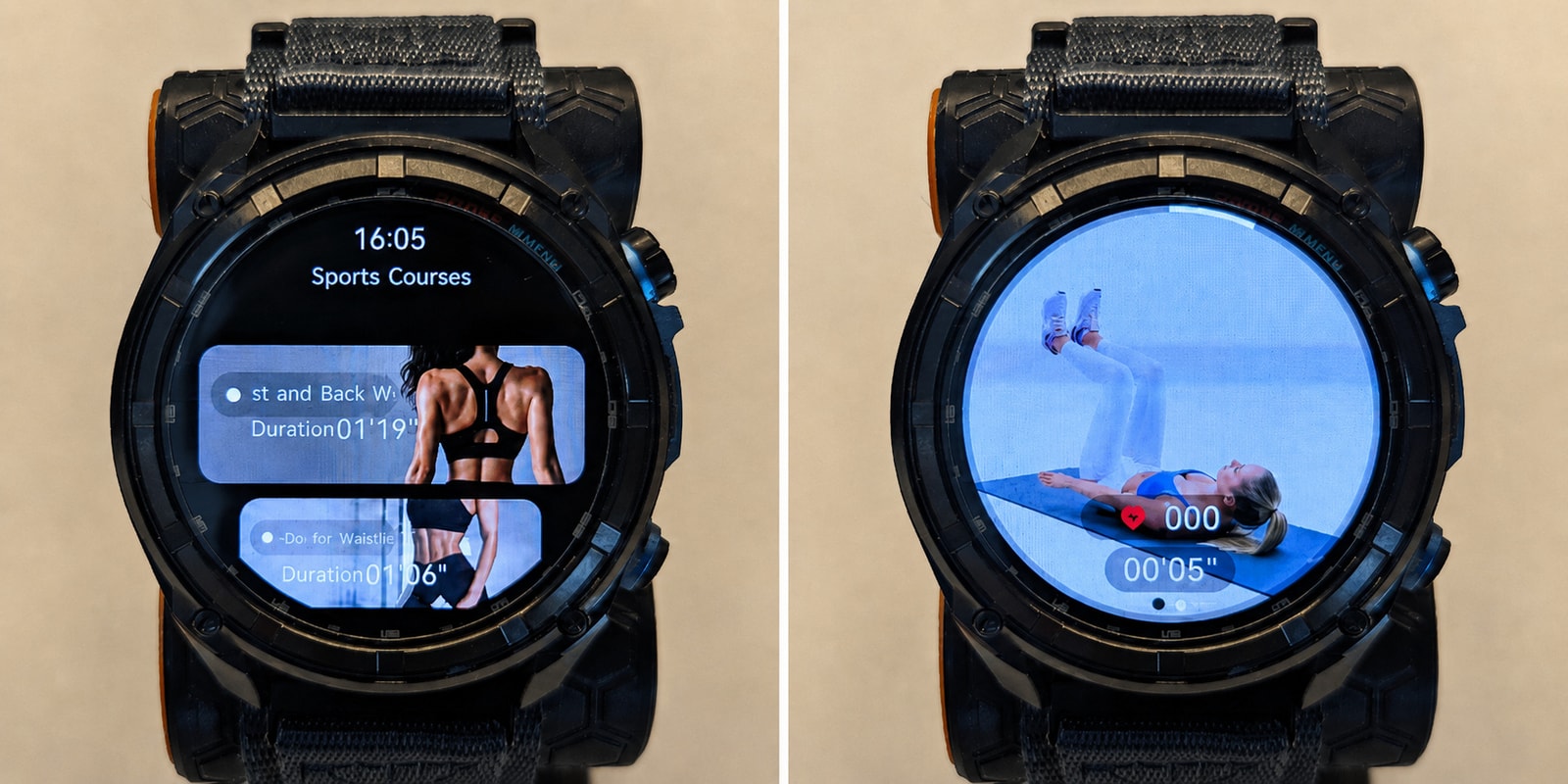
As usual, that number should not impress anyone by itself. On budget watches, many sports modes are just labels around the same basic tracking: duration, heart rate, calories, steps and sometimes GNSS. For certain key activities though, like hiking and outdoor walking, you do get a rich spread of metrics, plus the offline map (or breadcrumb navigation, if no maps of the area are present).
That said, having the modes is still useful. It helps organise activity history, and for casual users that may be enough.
There is also a sports-courses feature with little exercise videos and guided clips. It works, in the sense that the clips are there and play, but it is also a good example of this watch’s priorities being skewed. I would rather see the software effort spent on better notification handling, cleaner menus and stronger fundamentals than on tiny exercise videos on a round display.
Elliptical and steady cardio
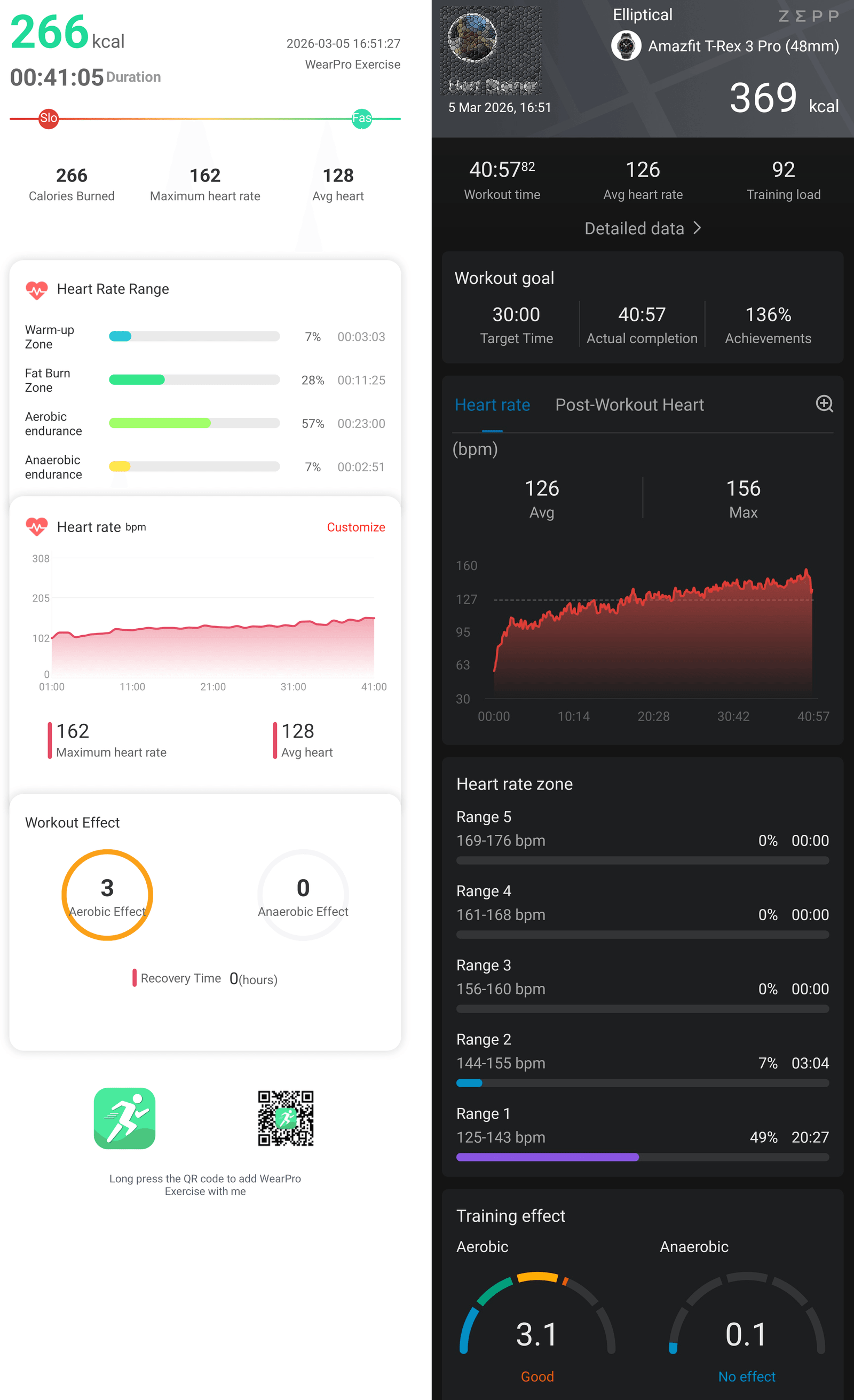
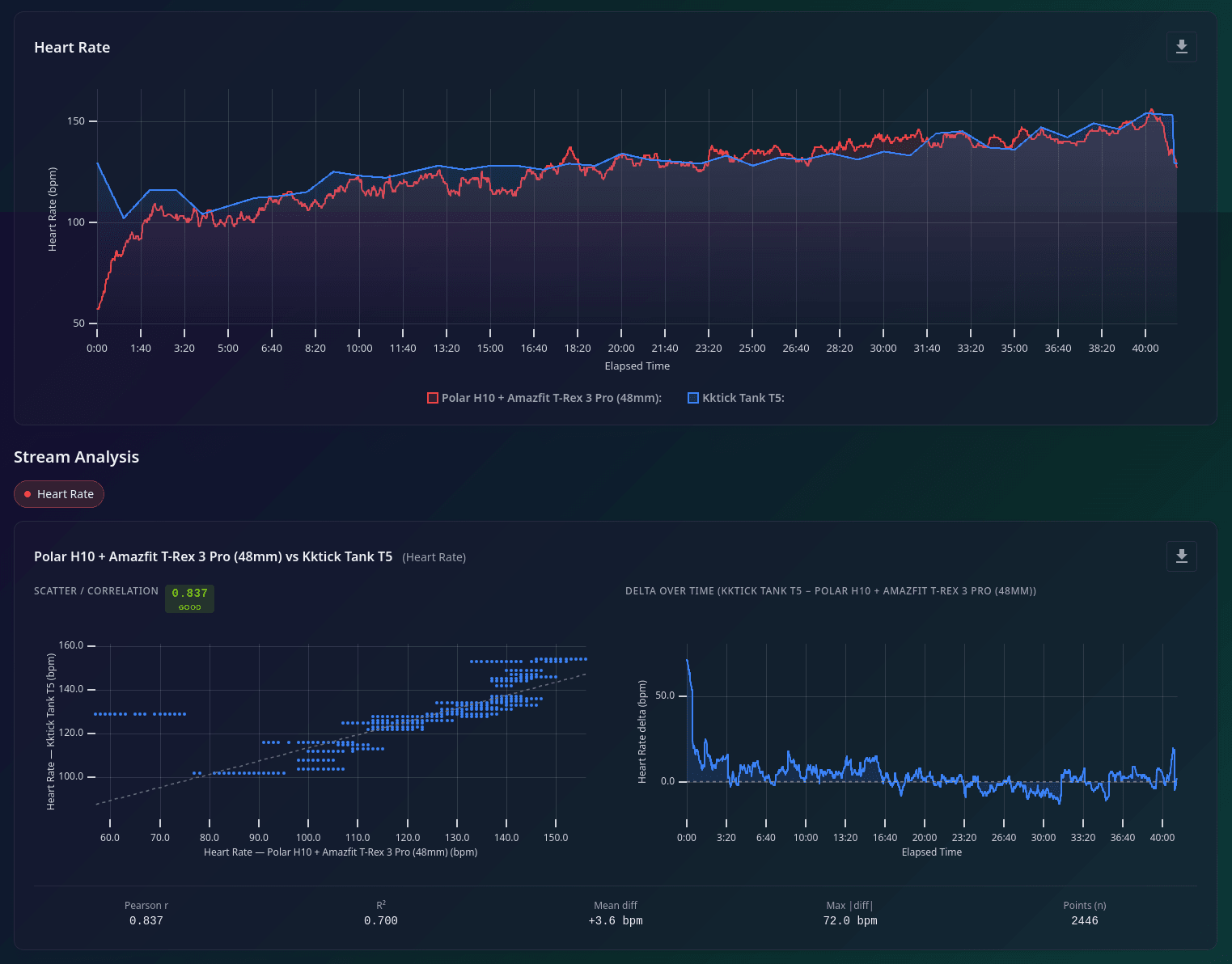
Steady cardio is where the heart-rate sensor has the best chance, and the Tank T5 did well.
Against a Polar H10 during elliptical training, it produced a 0.837 correlation. It lagged badly at the start, but once the session settled it tracked the broad heart-rate trend much better than I expected.
For casual calorie and activity tracking, this is certainly pretty good. Again, I like the way this watch calculates calories - same ballpark, but less optimistic than the Amazfit device.
Outdoor walking and hiking
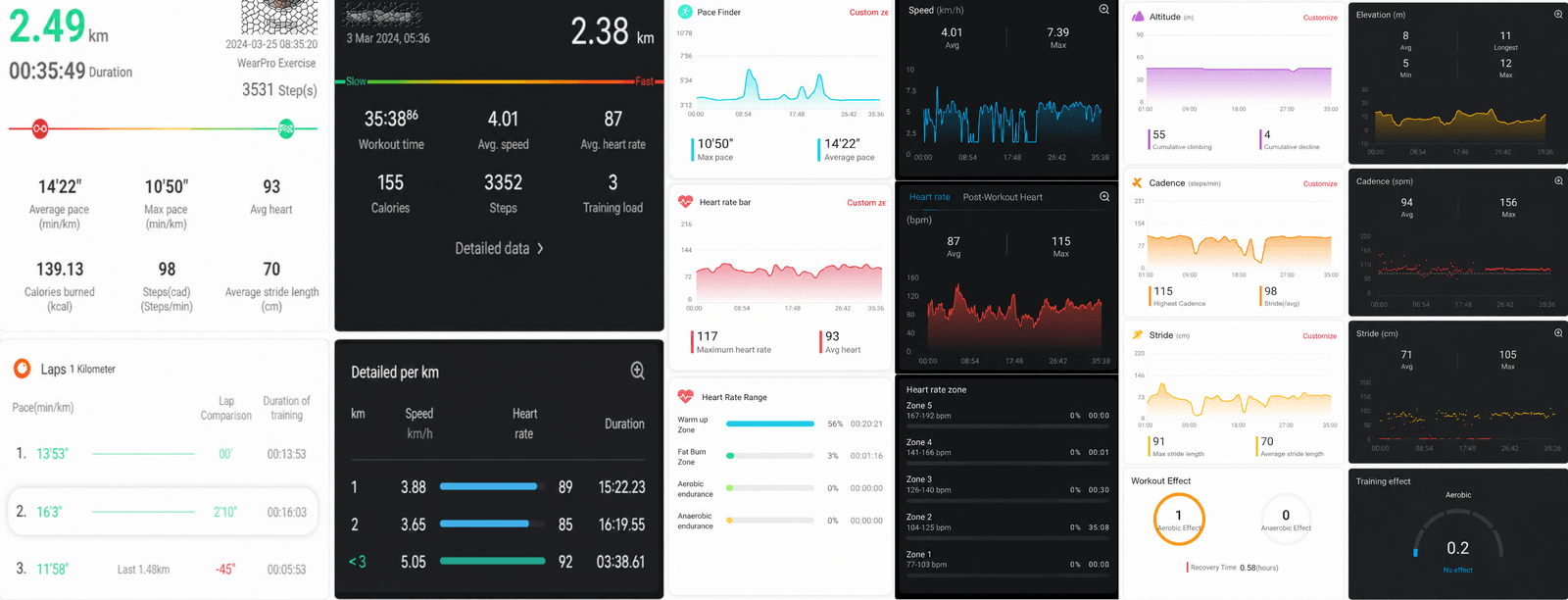
This is probably the Tank T5’s best use case: big battery, bright AMOLED screen, GNSS, offline maps, compass, barometer and flashlight are genuinely useful outdoors. If you want something cheap for walks, light hikes, camping, route checking and general outdoor messing about, the feature set makes sense.
As mentioned above in the GNSS section, the watch does a superb job here, with quick GNSS lock and accurate tracking.
Steps, calories and pace were fairly well estimated against the far more expensive Amazfit device. The exception was altitude. As mentioned above, the barometric altimeter is not automatically GNSS-calibrated, so that data is usually way off and rather useless.
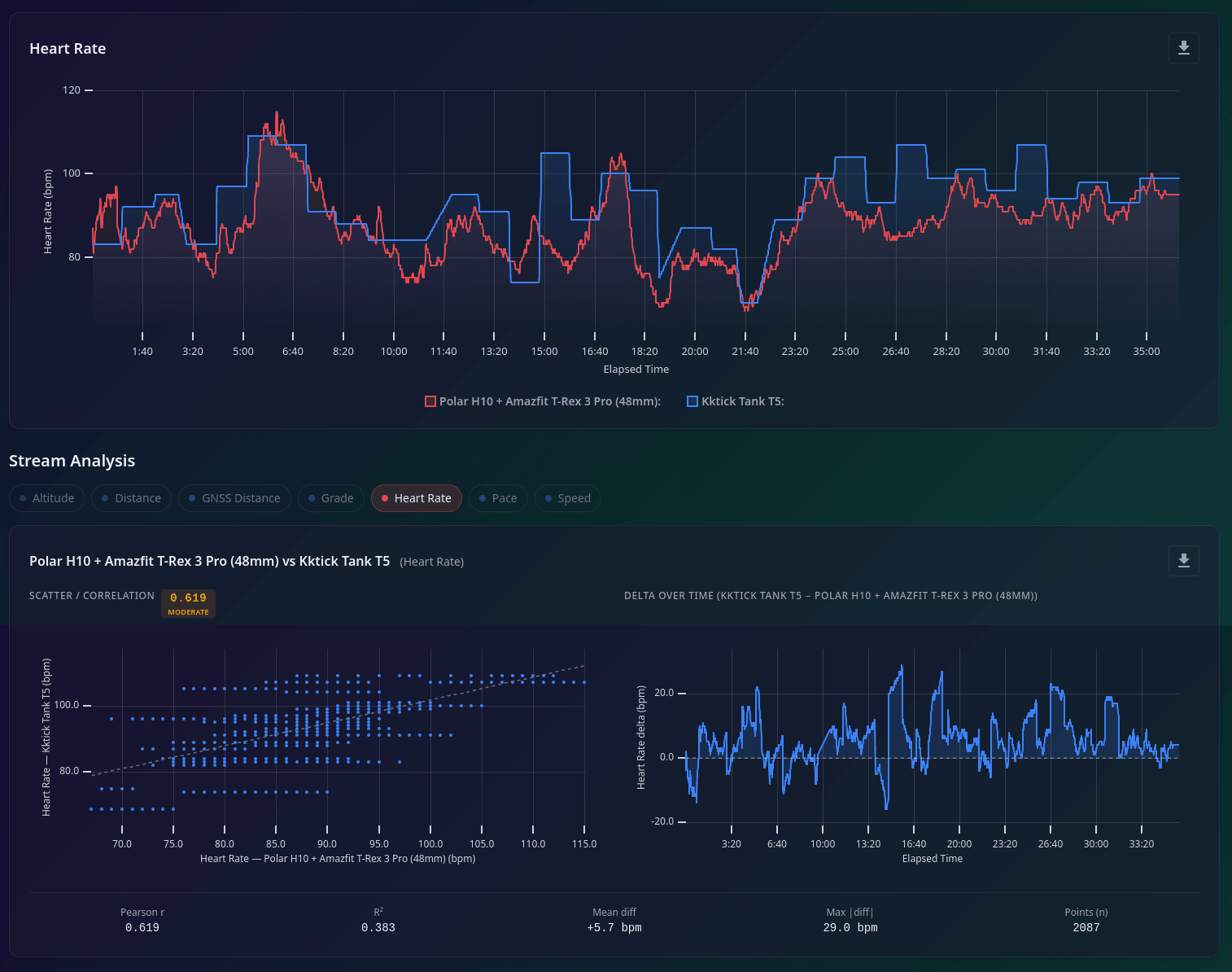
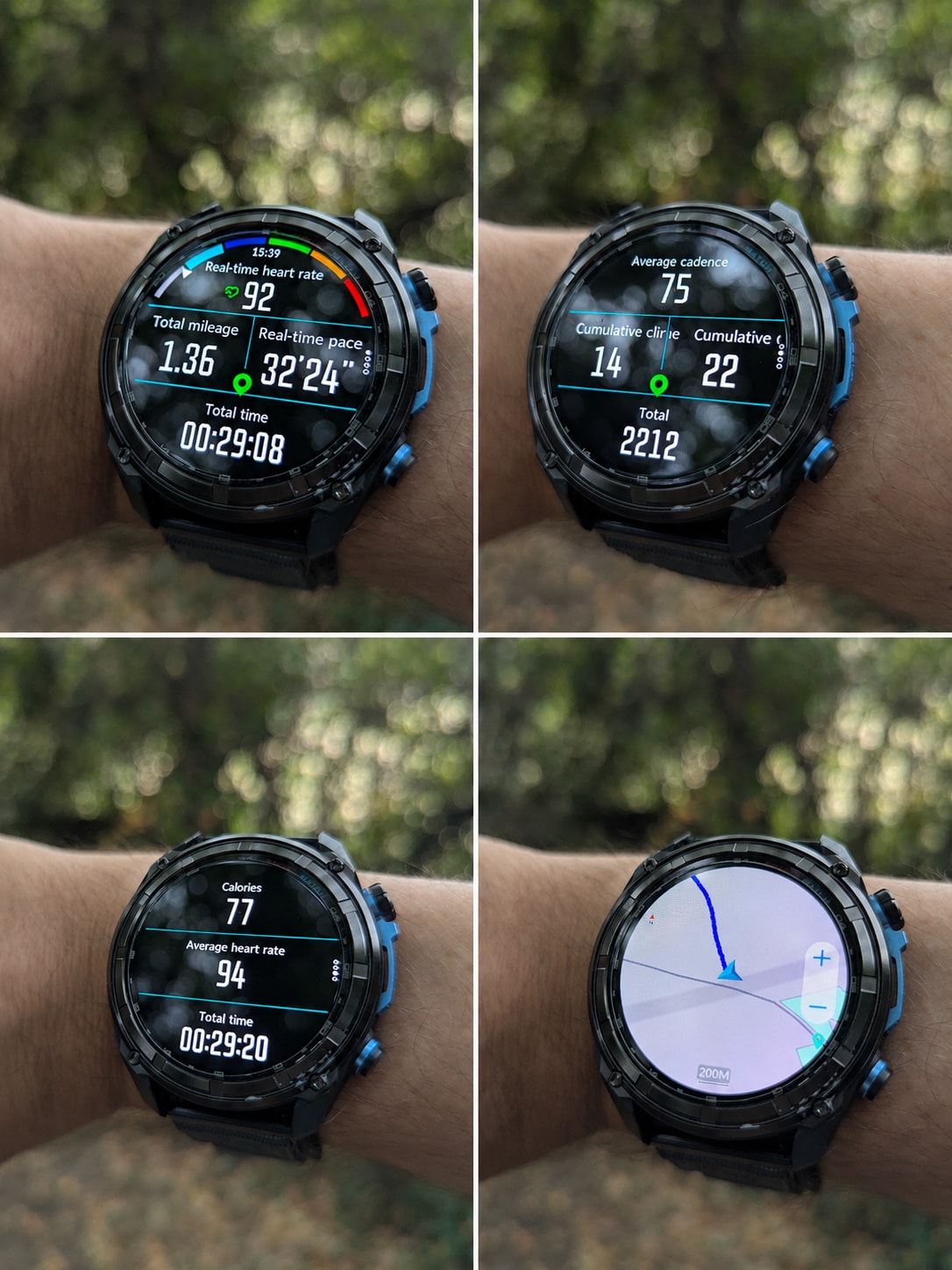
Heart-rate accuracy was more mixed here than in steady cardio. Against the Polar H10, the Tank T5 produced a 0.619 correlation in the exported walking data. It broadly followed the session, but the trace was very stepped and often sat noticeably above the chest strap, sometimes by 10-20 bpm.
Even so, I do not think the export tells the whole story. In live spot checks during activities, the wrist reading was often much closer to the chest strap than the graph suggests, so this looks at least partly like a data-presentation problem rather than the sensor being completely off.
The activity screen also displays the map, which doubles as a compass (your locator igon is an arrow), and you have a certain amount of freedom to zoom in and out as well as pan the immediate area. It works really well and definitely comes in handy during an activity, as well as being the primary way you’ll follow an imported GPX track,
Strength training
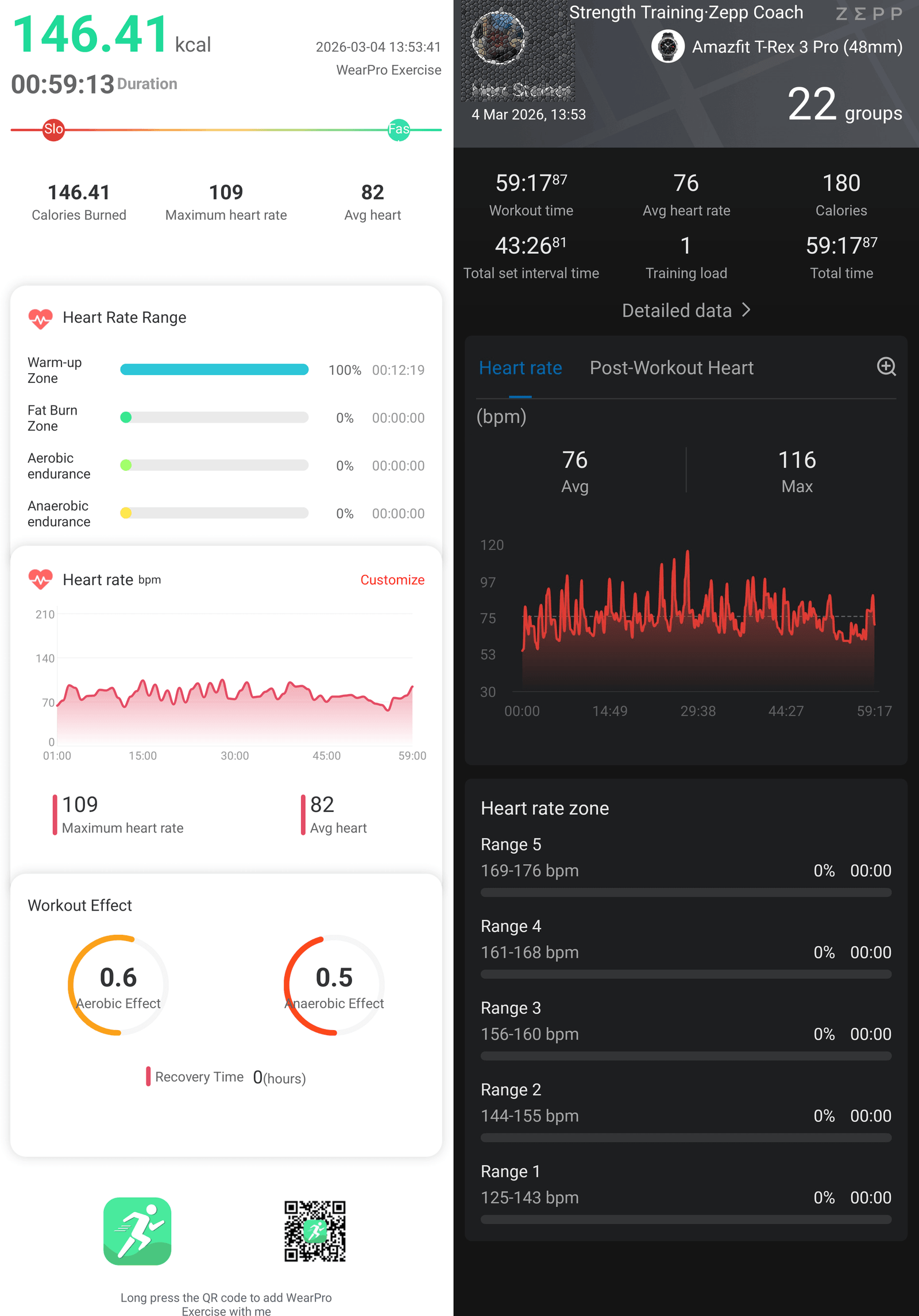
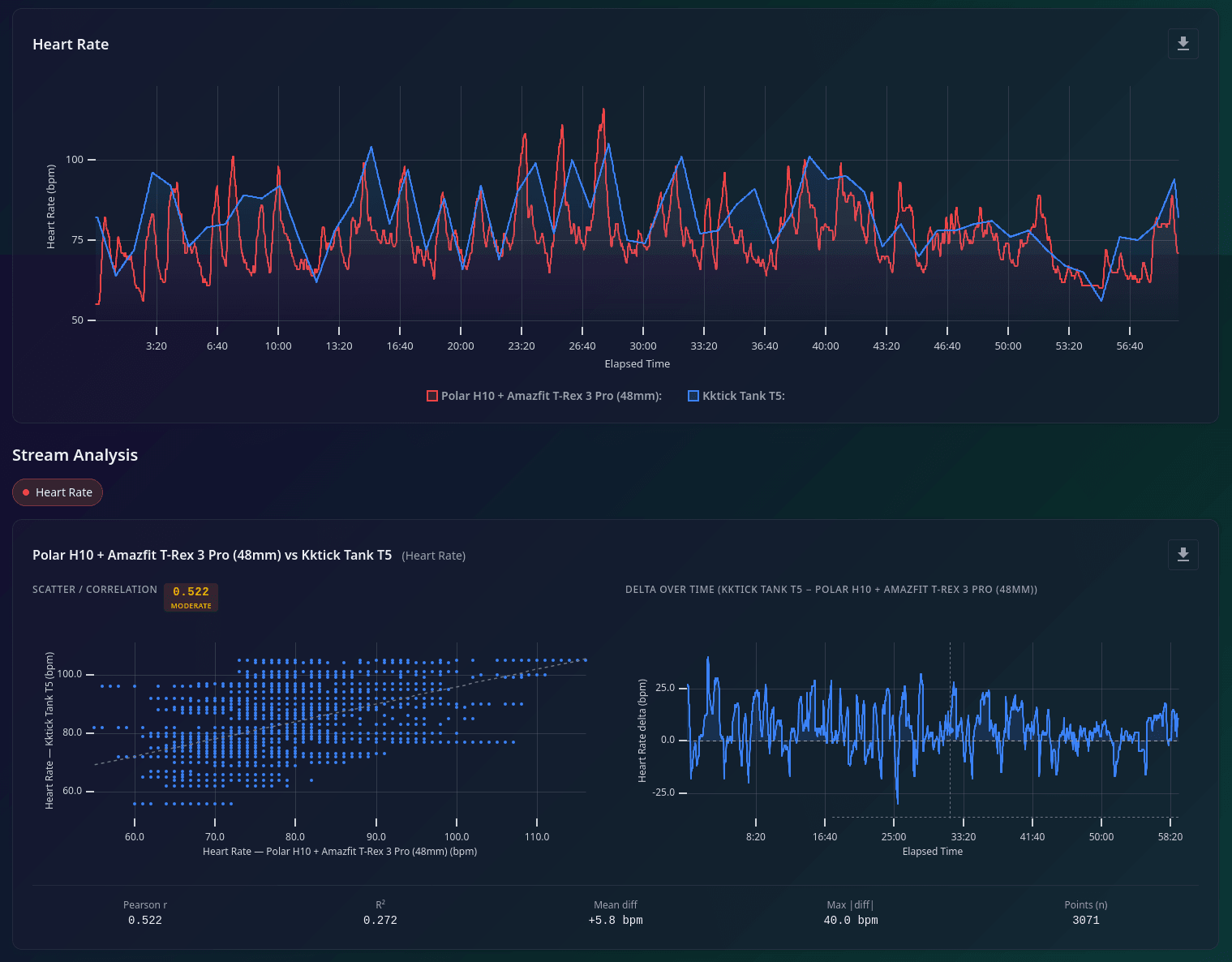
The stats are basic, but calorie burn and heart-rate data were within a reasonable ballpark of expectations and the comparison device, and even though some exercises are particularly hard on the heart-rate sensor, it did a fairly good job overall.
Against the Polar H10, it managed a 0.522 correlation during weight training. That is not great, and the watch missed many of the short spikes that a chest strap captured, which is exactly the sort of thing wrist-based PPG tends to struggle with in the gym.
Still, the broad trend was there often enough that I was less disappointed than I expected to be. Use it as a workout diary, not as a performance tool.
Smartwatch Features
As a smartwatch, the Tank T5 is feature-rich but shallow.
You get Bluetooth calling, notifications, music controls, local music playback, weather, alarms, timers, stopwatch, calculator, recorder, find-phone, local storage, watch faces and a voice-assistant-style phone trigger.
Bluetooth calling is useful if you want to answer calls from the wrist. Personally, I rarely care about this feature, but plenty of people do. The speaker is loud enough, the dialler includes a numeric keypad, and the microphone is acceptable in quiet places. I would not expect miracles in noisy environments.
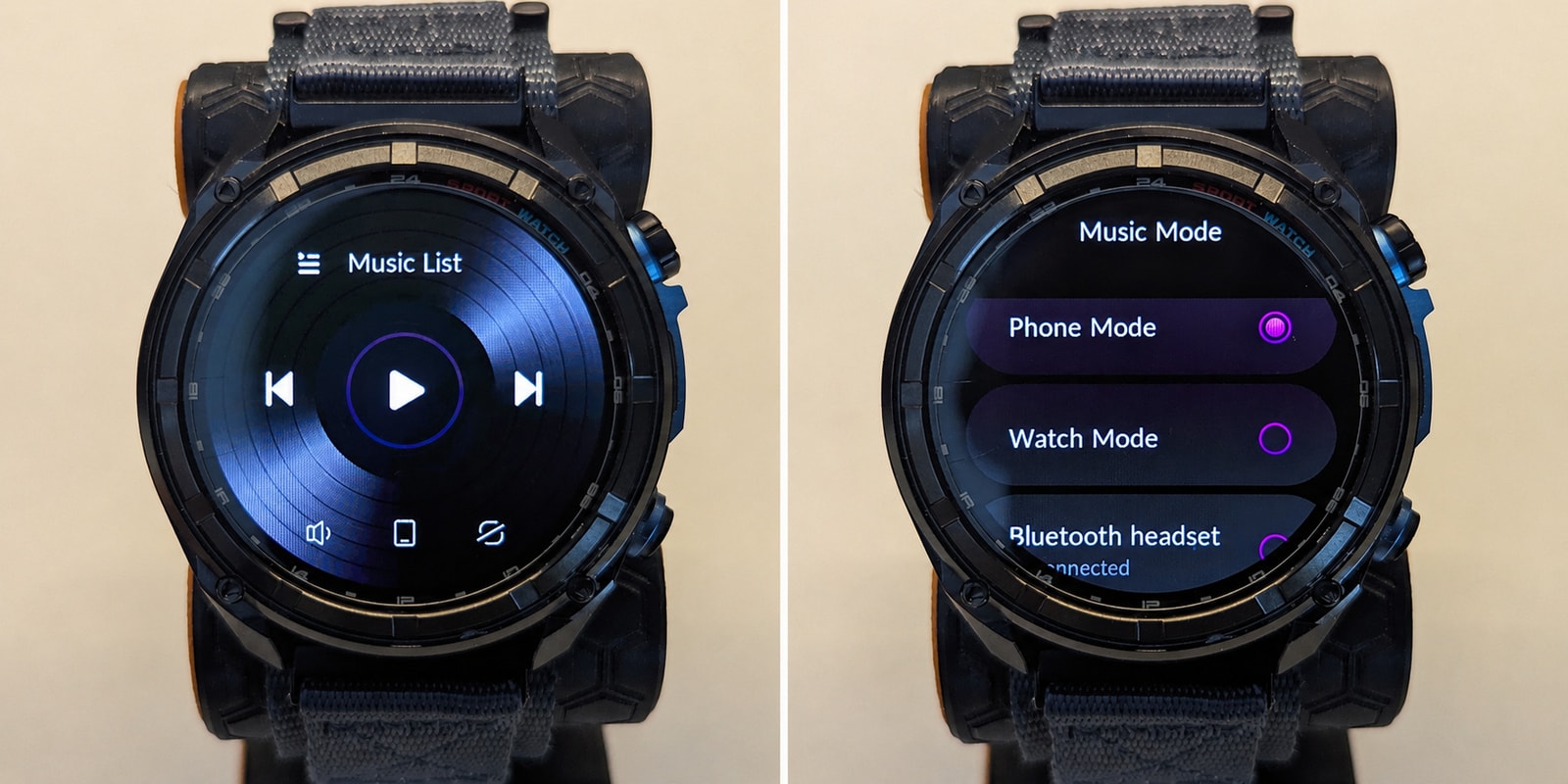
The music features are better than I expected. The watch can control phone playback, play MP3 files stored locally, and handle Bluetooth headphone connections directly. All of that worked well in practice, and because music transfer happens over the data cable rather than some awkward wireless sync process, putting files on the watch is straightforward.
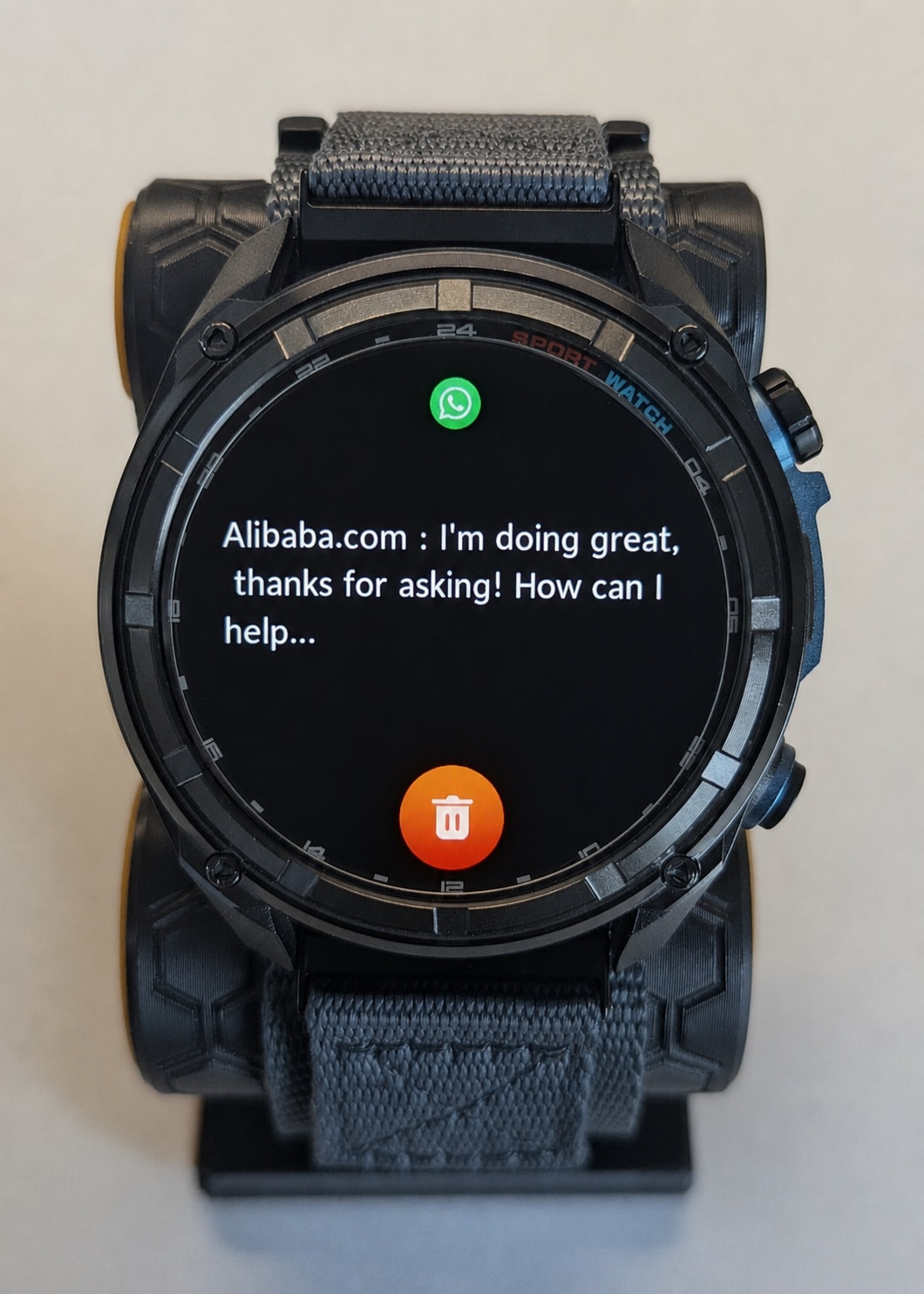
Notifications are disappointing. The watch only shows a couple of lines at a time, barely a sentence or a sentence and a half, so longer messages get cut down too aggressively. That is especially frustrating because other DTNO.1 watches are more capable here, with better WhatsApp handling, emoji support and in some cases the ability to send replies.
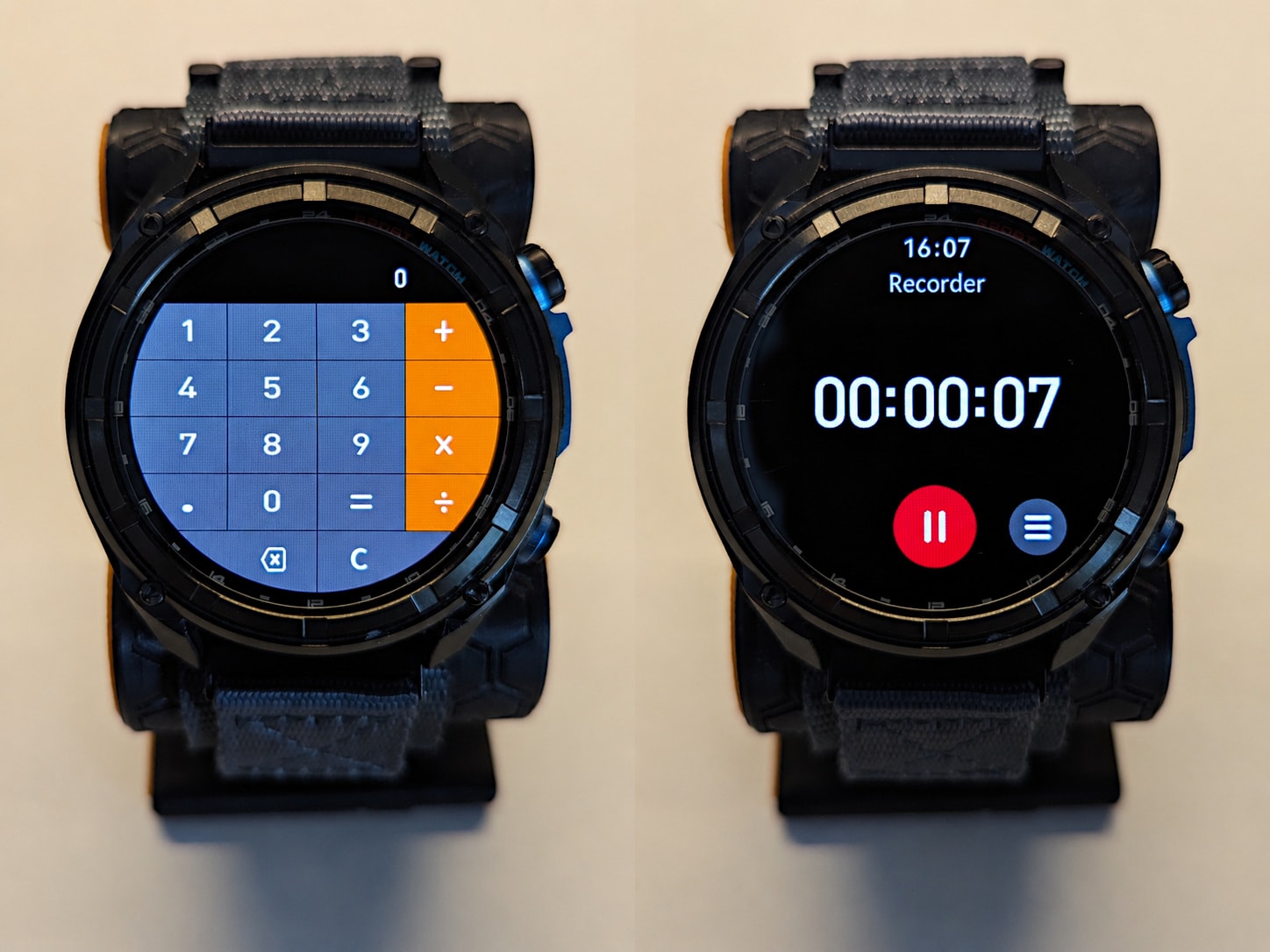
The small utility apps are a mixed bag. The timer is basic but serviceable, and more importantly it can run in the background. Alarms also work reasonably well. The calculator is simple but clear on the round display, and the recorder is one of those odd extras that at least does what it says.
There is also a decibel detector, weirdly, plus a games store, picture viewing and video viewing. But it is not the proper DTNO.1 app store that some other watches like the T6 can access, so this still feels like a diluted version of a better ecosystem rather than a fully featured one.
That is really the problem with the smartwatch side of the Tank T5. It has a long list of features, but too many are mildly amusing rather than genuinely useful on a watch. DTNO.1 has clearly nailed a lot of the hardware for the money. I would rather see the software focus on richer notifications, clearer menus and tighter fundamentals than on novelty extras.
Local storage is also interesting. With 4GB onboard, the watch has more room than many budget devices. It can be used for maps and media, which makes it more than a spec-sheet decoration.
The app: WearPro / Wear Joy
The app is the weakest part of the watch. Or should I say apps.
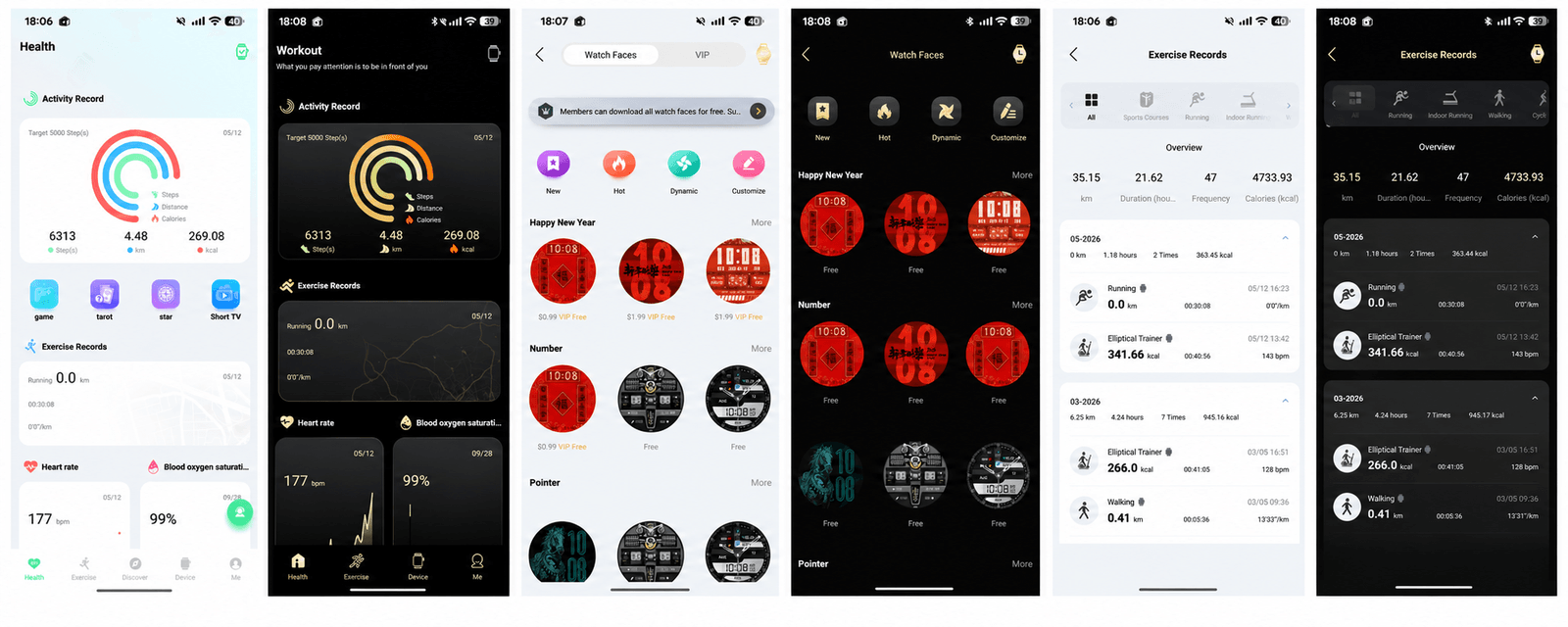
There are two apps you can use with the watch, WearJoy and WearPro. The T5’s instructions actually point you to WearJoy. It’s very confusing to work out which one you should be using, but both apps are basically identical with different looks and a few specific differences:
- WearJoy has a peculiar gold-and-black theme whereas WearPro is bright and colourful
- WearJoy has no Strava integration, WearPro does
- WearPro has adverts and other paid-for features
- Both apps have the same library of watch faces, but on WearJoy they’re free and on WearPro most are paid.
WearJoy seems more like an OEM effort and has no DTNO.1 branding, but otherwise they’re identical.
Tip: you can use both apps with the watch, as it can pair with both, but you’ll only be able to log in with one at a time.
Bluetooth connection is good and stable, notifications arrive quickly, and even though I’ve seen people complain about weather forecasts, in my experience that has always worked fine.
Exercise summaries, which we covered already, are basic but functional, with most of the metrics most people care about.
So they’re both basically serviceable, just not great and, especially in WearPro’s case, messy due to various non-watch-related bits like ads.
Conclusion
The KKTICK Tank T5 is one of the more interesting budget smartwatches I have tested. At around £50, it offers far more than the usual rugged-watch cosplay. The hardware feels solid, the AMOLED screen is good, battery life is strong, and the built-in flashlight is genuinely useful rather than gimmicky. More importantly, the outdoor features actually work. GNSS performance is surprisingly competent for the price, offline maps are real and usable, and GPX support plus generous storage make it feel like a credible cheap hiking or walking companion.
That is really the Tank T5’s main strength: it does not just look adventurous, it can actually back some of it up. Activity tracking is decent if basic, and the heart-rate sensor did better than I expected, even if the app’s one-minute averaging makes exports look worse than the live readings often seemed. For casual outdoor use, route checking, camping and sports tracking, it absolutely does the job for the money.
The weaknesses are mostly on the software side, with cluttered menus, patchy translations, poor notifications, confusing companion apps, unreliable all-day step counts and a few half-finished ideas. Even so, for a cheap, bulky, feature-packed outdoor watch, it is easy to recommend.